Automatic Lead Generation for B2B Teams
More automation does not automatically create more pipeline. It often creates more records, more enrichment failures, more generic messages, and a larger queue of leads that sales can't trust. The useful question isn't how many contacts a system can produce. It's whether the system can identify the right accounts, validate the data, explain its score, route the opportunity, and learn from the outcome.
That distinction matters because 61% of B2B teams use AI for lead scoring in 2026, compared with 23% in 2024, while the median MQL to SQL conversion rate is 13% and top quartile teams reach 28%, according to Digital Applied's 2026 B2B benchmark. Adoption is moving quickly, but the commercial test remains downstream. A system that fills a CRM isn't necessarily a system that produces accepted opportunities.
Table of Contents
- The Reality of Automatic Lead Generation
- Core Architecture of a Modern GTM Engine
- Solving the Enrichment and Deliverability Gap
- Navigating Compliance and Platform Limits
- Metrics That Actually Measure Pipeline Quality
- Orchestrating the Stack Without Tool Sprawl
The Reality of Automatic Lead Generation
The popular advice says to automate prospecting so the team can increase volume. That advice is incomplete. Raw volume is easy to create. Qualified pipeline is not. Without orchestration, automatic lead generation only moves manual work from prospecting into enrichment review, sales acceptance, reply handling, and CRM cleanup.
A modern system is better understood as an operating layer for repeatable GTM decisions. It sources accounts and people, enriches missing fields, evaluates fit and intent, prepares a message, requests approval where risk is high, routes the lead to the correct owner, and records what happened. The conversation still needs a human voice. Software should compress the repetitive research and coordination around that conversation.
Practical rule: Automate preparation and routing before automating judgment.
The historical shift is visible in the results teams now expect. A 2026 lead generation benchmark reports that marketing automation can generate up to 451% more qualified leads, while the same summary says 80% of marketing automation users see an increase in leads generated and 44% of companies report increased leads after adopting such platforms. Those figures describe why adoption continues, not why every implementation works. More qualified records still need accurate data, relevant outreach, and a sales process that accepts the handoff.
From list building to signal led prospecting
List led workflows begin with a database filter and ask the sales team to create relevance later. Signal led workflows begin with a reason to act, such as a relevant company change, a known operational problem, a matching technology footprint, or a meaningful interaction with the business.
That change improves the quality of the decision before a message is written. An ICP is no longer just industry, size, and title. It becomes a set of conditions that the system can check, explain, and update when the market changes.
Teams evaluating a lead scraper API should therefore ask more than whether it can collect records. They should ask whether the source is permitted, whether the output can be enriched and deduplicated, whether each field has provenance, and whether the workflow can stop before an unsuitable action is taken.
The operating model described in outbound lead generation follows that logic. Source data is only the beginning. The system must connect research, qualification, sequencing, and feedback so the next campaign benefits from the last one.
Core Architecture of a Modern GTM Engine
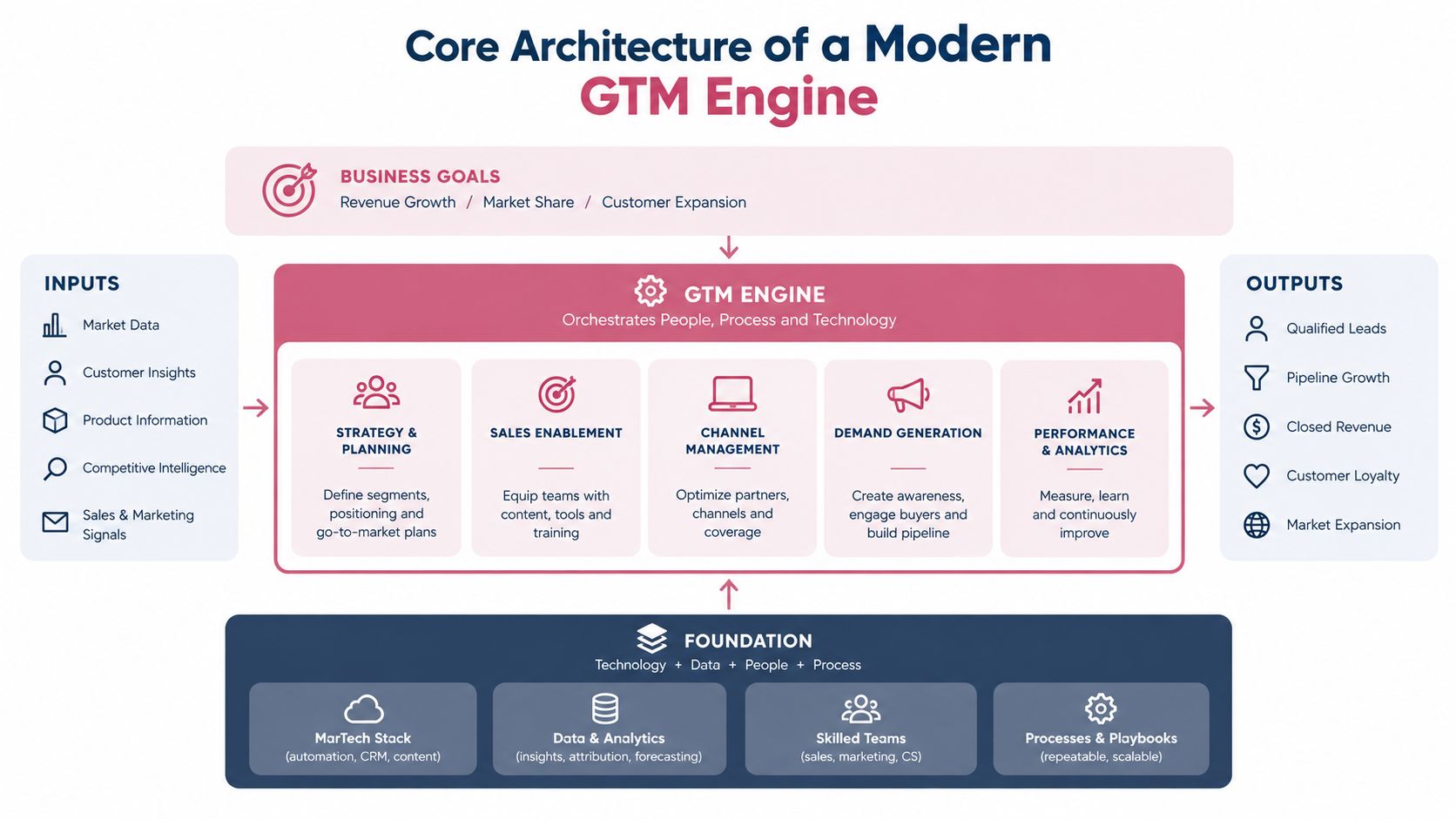
A dependable GTM engine has four layers, and each layer has a distinct job. The sequence matters because errors introduced at the source become more expensive after enrichment, scoring, and outreach.
1. Source the right account and person
The input layer gathers accounts, contacts, first party intent, referrals, event data, and approved external sources. It should preserve the origin of every record and avoid treating a broad database query as proof of fit.
Start with the account. Confirm the company matches the ICP, then identify the roles that can experience, own, or influence the problem. This order reduces the common failure where a workflow finds an available contact first and invents account relevance afterward.
2. Enrich without hiding uncertainty
The enrichment layer adds firmographics, contact details, technologies, locations, roles, and other fields required by the scoring model. It should distinguish between a confirmed value, a recently observed value, an inferred value, and a missing value.
That distinction is operationally important. A job title may have changed even when the company domain remains correct. A technology signal may indicate a past installation rather than current usage. The scoring layer should be able to lower confidence when a volatile field can't be verified.
3. Score against a living ICP
A useful score combines fit, evidence, and timing. It doesn't merely assign points for seniority. It explains why the account qualifies, which evidence supports the recommendation, and what would disqualify it.
GTM knowledge orchestration gives the system the context needed to make that decision consistently. The ICP, positioning, voice, exclusions, successful plays, and prior campaign outcomes should be available at run time, rather than pasted into a blank prompt. The distinction between a fixed workflow and contextual reasoning is explained in AI orchestration for GTM teams.
4. Sequence, route, and learn
The final layer turns a qualified lead into an approved action. It selects a channel, prepares a message based on the account context, routes the record to the correct owner, and pauses when the prospect replies or the data becomes uncertain.
A unified API helps preserve context across those steps. Fragmented tools often copy a partial record from one system into another, which creates duplicate fields, stale scores, and unclear ownership. A unified interface doesn't remove the need for good design, but it makes the data path easier to inspect and change.
| Layer | Primary question | Required output |
|---|---|---|
| Source | Why is this account worth reviewing? | Account and contact candidates with provenance |
| Enrichment | Which fields are known and how reliable are they? | Normalized records with confidence |
| Scoring | Does this lead fit the ICP now? | Explainable score and qualification reason |
| Execution | What should happen next, and who owns it? | Approved sequence, route, pause rule, and outcome log |
The output shouldn't be a list exported to a sales rep. It should be a decision package. The rep needs the reason for contact, the evidence behind the score, the recommended next action, and a clear way to reject the lead so the system can improve.
Solving the Enrichment and Deliverability Gap
Automatic lead generation fails downstream when enrichment and sending quality are treated as afterthoughts. A workflow can create records quickly, yet still flood sales with incorrect titles, stale technologies, or unverifiable contacts. Match rate and accuracy require separate checks. A provider may attach data to many records while returning unreliable values.
Start with a representative sample of 500 to 1,000 CRM records, then measure each field and run a 30 day deliverability test, following data enrichment evaluation guidance. Include the segments, regions, company sizes, and roles the team targets. An easy sample can make a provider look accurate while hiding failures in the broader motion.
Measure fields, not just matched records
Track fill rate, accuracy, freshness, and conflict rate for each important field. A populated field with the wrong value can create more risk than a blank field because it gives the workflow false confidence.
| Data Category | Expected Accuracy | Volatility Risk |
|---|---|---|
| Firmographic fields | 85% to 95% | Lower |
| Contact title fields | 70% to 85% | Higher |
| Technographic fields | 60% to 80% | Medium to high |
Use company data to establish account fit, then validate contact and title data before a sensitive action. An old title should not trigger a highly specific message without a confidence check. The ranges above are evaluation benchmarks, not guarantees for every provider or segment.
A fallback chain can combine a primary provider, a secondary provider, and manual review. If two sources disagree on a job title, flag the record instead of accepting the value that arrived last. If the domain cannot be verified, keep the record out of the send queue. A unified GTM API makes these states visible across enrichment, scoring, and execution, while a self-grading workflow can lower confidence when fields conflict or age.
Protect the sending reputation
Deliverability needs its own gate. Cold email benchmark guidance treats 85% or higher inbox placement as generally strong, with top performers at about 93% and above. Healthy operations also keep hard bounces below 2% and spam complaints below 0.1%, according to 2026 email deliverability benchmarks.
Treat those thresholds as warning signals rather than campaign targets. Suppress invalid addresses, remove repeated hard bounces, pause sending when complaints rise, and route uncertain contacts into review. Before increasing volume, teams can test email deliverability and compare the result with their own bounce and complaint logs.
The best lead enrichment tools for 2026 should be assessed across this chain, not by database size alone. Useful enrichment supports a defensible decision, and orchestration quality keeps unqualified pipeline from becoming sales work.
Navigating Compliance and Platform Limits
Compliance isn't a legal appendix to automatic lead generation. It is an execution constraint that determines which sources, channels, actions, and approval states the system can use. A workflow that ignores those constraints may produce attractive activity while putting accounts, domains, and brand trust at risk.
LinkedIn's documentation says third party software, crawlers, bots, browser plugins, and extensions that scrape, modify, or automate activity on the platform aren't permitted. That includes tools that add or download contacts, send or redirect messages, or drive inauthentic engagement, as described in LinkedIn's platform guidance on scraping and automation.
Design around approval and pacing
LinkedIn's recruiter help guidance also says accounts can be temporarily restricted when they view an unusually large number of profiles or show signs of automation. It recommends stopping automated activity and disabling extensions or third party tools when access is restricted, according to LinkedIn account restriction guidance.
The technical response is not to disguise automation. It is to remove unnecessary automated browsing, use approved access methods, limit actions, and create a fallback path that doesn't depend on continuous profile viewing.
A governed workflow should include:
- Human approval gates: Require review before a message, connection request, or other sensitive action is sent.
- Scoped permissions: Give each agent only the access required for its task, such as reading a dataset without permission to send.
- Pacing controls: Set limits for runs and queues so volume doesn't become the only operating variable.
- Pause conditions: Stop when data conflicts, consent is unclear, a reply arrives, or a platform signals risk.
- Audit records: Store the source, decision, approval, action, and outcome for every material step.
Governance principle: A system is safer when it can explain why it acted and prove who approved the action.
Treat email requirements as workflow logic
Commercial email requires clear advertising identification, sender identity, a physical address, and an opt out mechanism that is honored promptly under CAN SPAM. Canadian anti spam law requires explicit consent unless an existing business relationship or a publicly available address relevant to the offering provides an exception, according to this neutral compliance summary for lead generation.
Those requirements belong in the data model. Store consent status, source, timestamp, jurisdiction, suppression status, and the reason a contact entered a sequence. An unsubscribe should update every relevant channel, not just one campaign list.
Metrics That Actually Measure Pipeline Quality
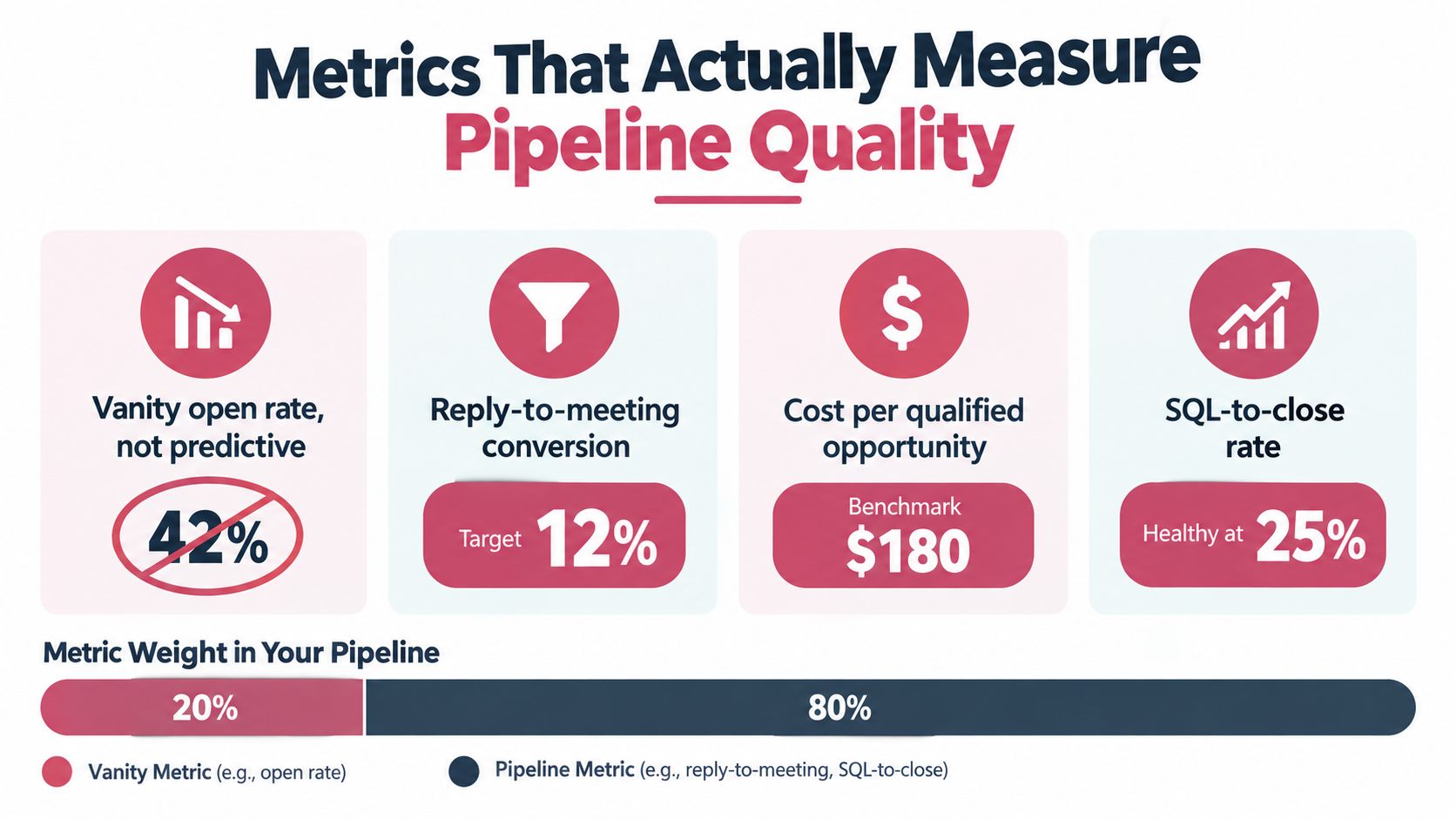
Open rates and total sends are easy to report and weak as primary measures. They can indicate that a message reached an inbox or that a tracking event fired, but they don't show whether the account fit the ICP, whether sales accepted the lead, or whether the opportunity became revenue.
The funnel starts with a difficult baseline. Website conversion is commonly reported around 1% to 5%, with a median near 2.9% in one large multi industry analysis, while one 2026 aggregation places MQL to SQL conversion at about 9.8%, according to B2B lead generation funnel benchmarks. That makes qualification and handoff efficiency more useful than a raw traffic or contact count.
Separate the layers of performance
A self grading campaign should report at least four separate layers:
- Enriched volume: How many usable records entered the system, after deduplication and validation?
- Accepted lead rate: How often did sales accept the lead rather than reject it as unsuitable?
- Meeting and SQL conversion: How many accepted leads became meetings and sales qualified opportunities?
- Revenue conversion: Which plays produced closed business, and how long did that take?
The separation prevents a high volume source from hiding poor fit. It also lets operators compare static list outreach with signal led prospecting after excluding low intent records. A message can generate replies and still fail if those replies don't become accepted opportunities.
Turn every campaign into a test
Each sequence should have a hypothesis, an audience definition, a decision rule, and a retirement condition. For example, a team might test whether a specific buying signal produces better meeting acceptance than a generic industry list. The system should record the source, enrichment confidence, score, message variant, human approval, reply classification, and eventual disposition.
Self grading becomes useful here. The system doesn't just send and report. It assigns a verdict, records the reasoning, and feeds the result into the next decision. Weak plays are paused. Strong plays earn more use only after their performance is checked against lead quality and revenue outcomes.
The quality gap is real. One 2026 market summary reports that AI powered lead generation can increase qualified leads by 73% within six months, while another benchmark says only 57% of SDRs hit quota even in AI augmented teams, according to AI lead generation coverage from Stealth Agents. The practical lesson isn't that automation fails. It is that automation often moves the bottleneck downstream, where sales acceptance, conversation quality, and closing discipline determine value.
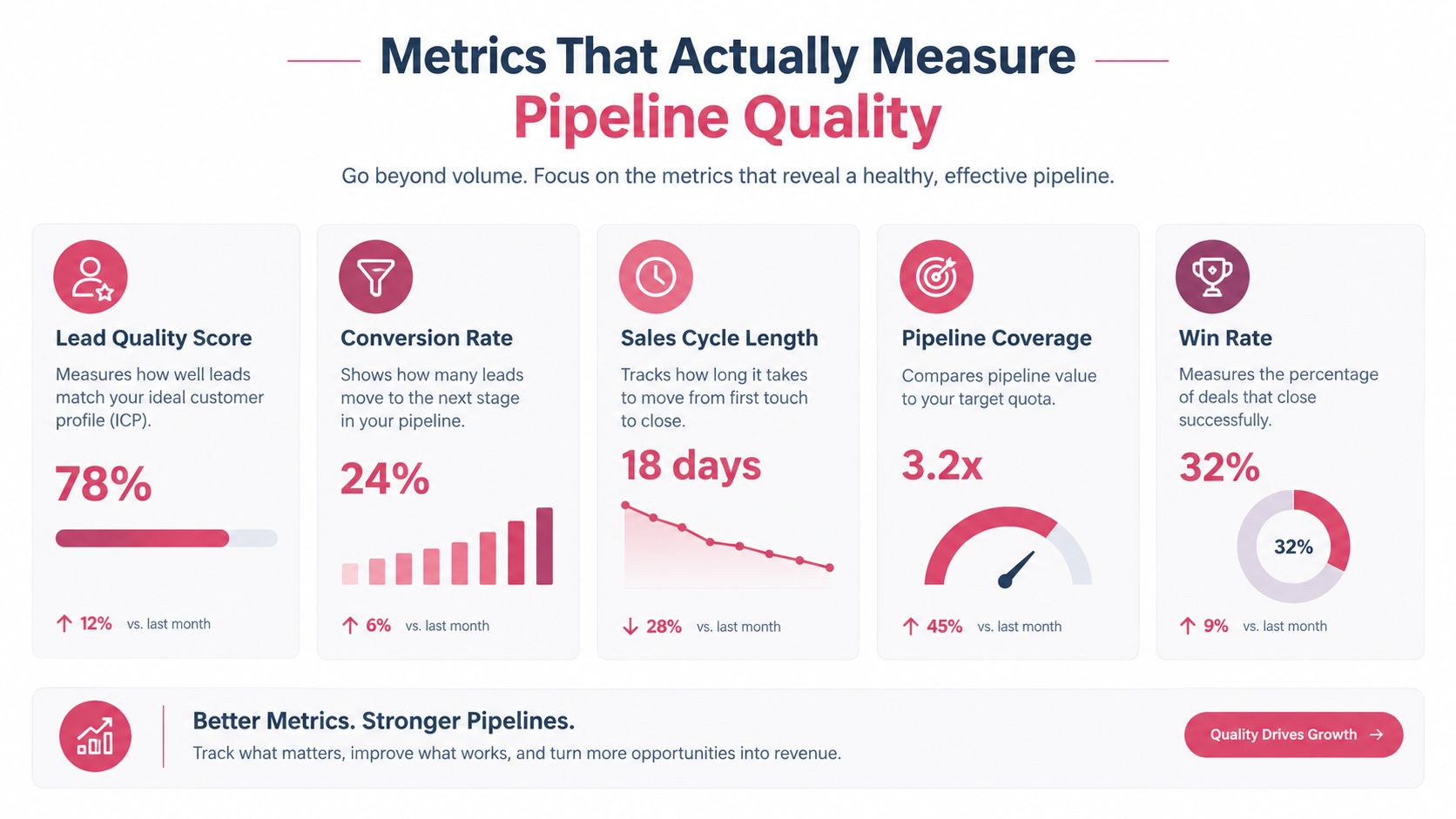
The reporting view should make that bottleneck visible. Show volume and cost, but give greater attention to accepted opportunities, reply to meeting movement, SQL quality, and revenue conversion. If the team can't tell which inputs produce qualified pipeline, it doesn't have an automatic lead generation system. It has an automated activity log.
Orchestrating the Stack Without Tool Sprawl
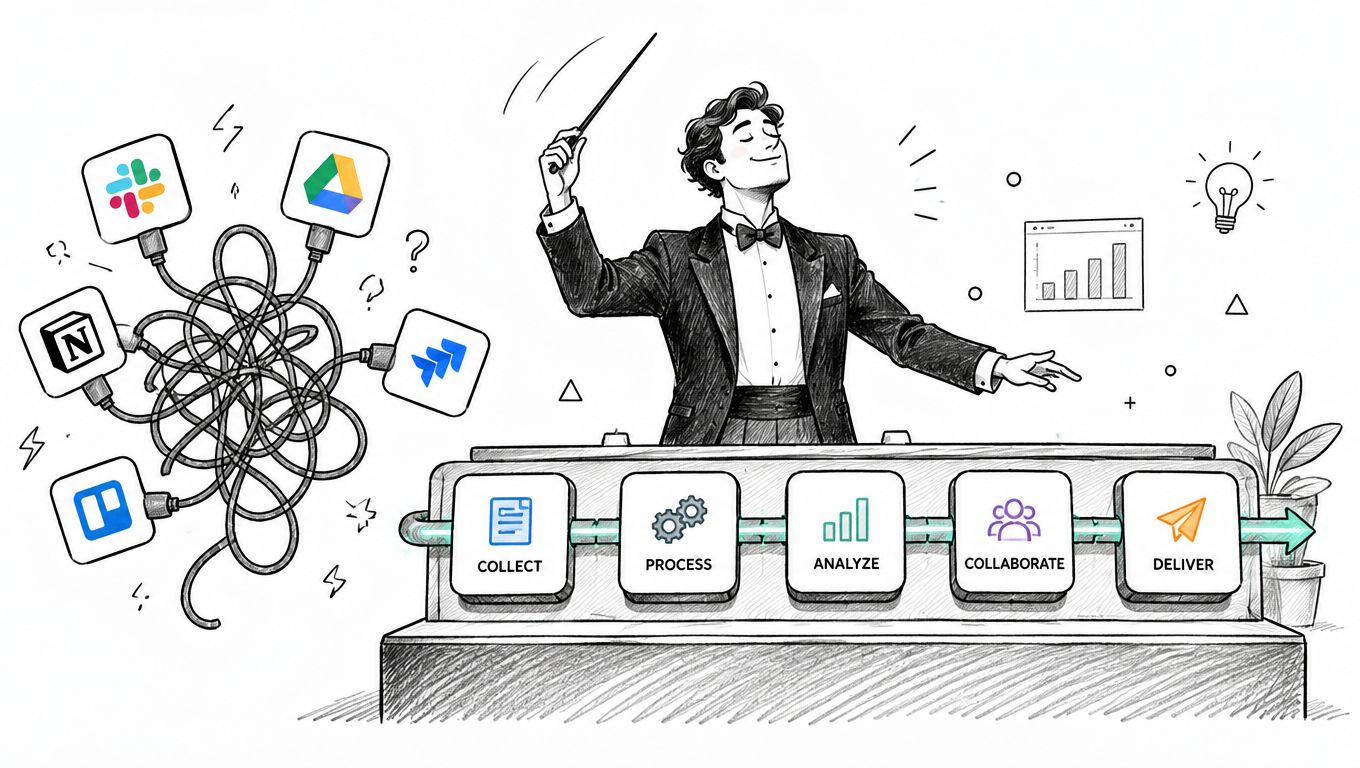
Five disconnected tools can each work well and still produce a poor operating system. One tool finds accounts, another enriches contacts, another writes messages, another launches sequences, and the CRM stores a partial history. Every handoff introduces mapping errors, stale context, credential duplication, and another place for an operator to check a failed run.
A unified GTM API changes the design choice. The team can keep specialized providers while presenting sourcing, enrichment, scoring, sequencing, CRM updates, and reporting through one controlled interface. That makes providers replaceable without rebuilding the entire motion, and it gives the system one place to apply ICP rules, permissions, approval gates, and outcome logging.
Keep engineering control and operator simplicity
Engineers need composability. They should be able to combine atomic skills, inspect inputs, change logic, version playbooks, and connect APIs without waiting for a vendor to define every workflow. Revenue operators need the opposite surface. They need a configured playbook in the tools they already use, with clear approval steps and a visible result.
A workable architecture supports both. The same engine can expose a programmable interface for custom plays and a simpler interface for approved workflows. The important part is that both surfaces use the same data, permissions, scoring rules, and accumulated knowledge.
Yalc is one example of that model. It provides a unified GTM API across tools such as Unipile, FullEnrich, lemlist, Crustdata, Notion, Claude, Slack, and other API enabled channels, while allowing teams to compose plays through its MCP or run configured playbooks from Slack and its interface. Its self grading approach records campaign outcomes and promotes knowledge from hypothesis to validated to proven, while human approvals, scoped permissions, and step by step telemetry support controlled execution.
Make data control part of the operating model
Credentials and prospect data should remain on infrastructure the team controls where the operating requirements call for it. Vendor portability matters because enrichment providers, CRMs, messaging systems, and models change. A play stored as portable Markdown or YAML is easier to inspect, fork, and improve than logic trapped inside an opaque workflow builder.
The compounding advantage comes from retained learning. A failed sequence should leave behind a reason, not just a disappointing dashboard. A successful source should retain the segment, signal, message, approval path, and conversion evidence that made it work. Over time, the system becomes less dependent on individual operator memory and more capable of repeating the decisions that have earned trust.
Yalc gives B2B teams a controlled orchestration layer for sourcing, enrichment, qualification, sequencing, CRM work, and campaign reporting, with self grading, human approvals, scoped access, and data held on infrastructure they control. Visit Yalc to see how a unified GTM API can turn automatic lead generation from a volume exercise into a measurable pipeline system.