Cold Email Outreach Platform: How to Pick One
A cold email outreach platform can send every message on schedule and still fail before the first reply. Independent 2026 benchmarks report average deliverability of 83.1% across 15 major sending platforms, with 10.5% of emails landing in spam and 6.4% going missing entirely (EmailChaser). The counterintuitive buying lesson is simple: the platform that sends fewer, better controlled emails can create more pipeline than the platform with the largest sequence limit.
Table of Contents
- What a Cold Email Outreach Platform Does in 2026
- Deliverability Is the Foundation, Not a Feature
- Comparing the Four Platform Categories Side by Side
- Personalization and Automation Without Breaking Inbox Health
- Compliance and Data Governance as a Deliverability Layer
- Multichannel Sequences and Why Email Only Underperforms
- Decision Framework by Team Size and Motion
- Underserved Questions Buyers Actually Ask
What a Cold Email Outreach Platform Does in 2026
The decision isn't whether to replace one sequencer with another. It's whether the revenue team is buying a reliable outbound stack or adding another disconnected tool to an already crowded system.
A modern cold email outreach platform typically owns five operational jobs:
- Inbox rotation: Distributes sends across connected mailboxes and domains.
- Warmup and reputation controls: Establishes sending patterns and monitors mailbox health.
- Sequencing: Schedules initial emails, follow ups, and stop conditions.
- Reply handling: Routes positive, negative, out of office, and unsubscribe responses.
- Signal routing: Uses account activity, intent, engagement, or CRM status to decide who gets contacted next.
That isn't the same as a CRM, a data provider, or an AI writing layer. Salesforce and HubSpot hold customer records and pipeline stages. Data providers find or enrich contacts. AI writing tools generate copy. The outreach platform should coordinate sending and response operations without forcing the team to pay twice for the same capability.
A useful evaluation model has four lenses:
- Deliverability infrastructure, including authentication support, warmup, rotation, verification, and inbox monitoring.
- Automation depth, including branching logic, reply detection, channel coordination, and approval controls.
- Personalization quality, from simple fields to research based message generation.
- Jurisdiction aware compliance, including suppression lists, consent records, audit logs, and unsubscribe handling.
Consider a 10 rep SaaS team sending 50,000 prospecting emails each month. If the platform treats every mailbox and recipient provider identically, a portion of that activity may reach primary inboxes, promotions tabs, spam folders, or nowhere at all. The platform choice affects the quality of every downstream metric, including replies and meetings.
Teams new to outbound should first clarify the broader mechanics of outreach, including targeting, messaging, and channel selection, through this practical overview of outreach para tu equipo con Ploot. That context helps buyers avoid selecting a sending tool before defining the operating model it must support.
Deliverability Is the Foundation, Not a Feature
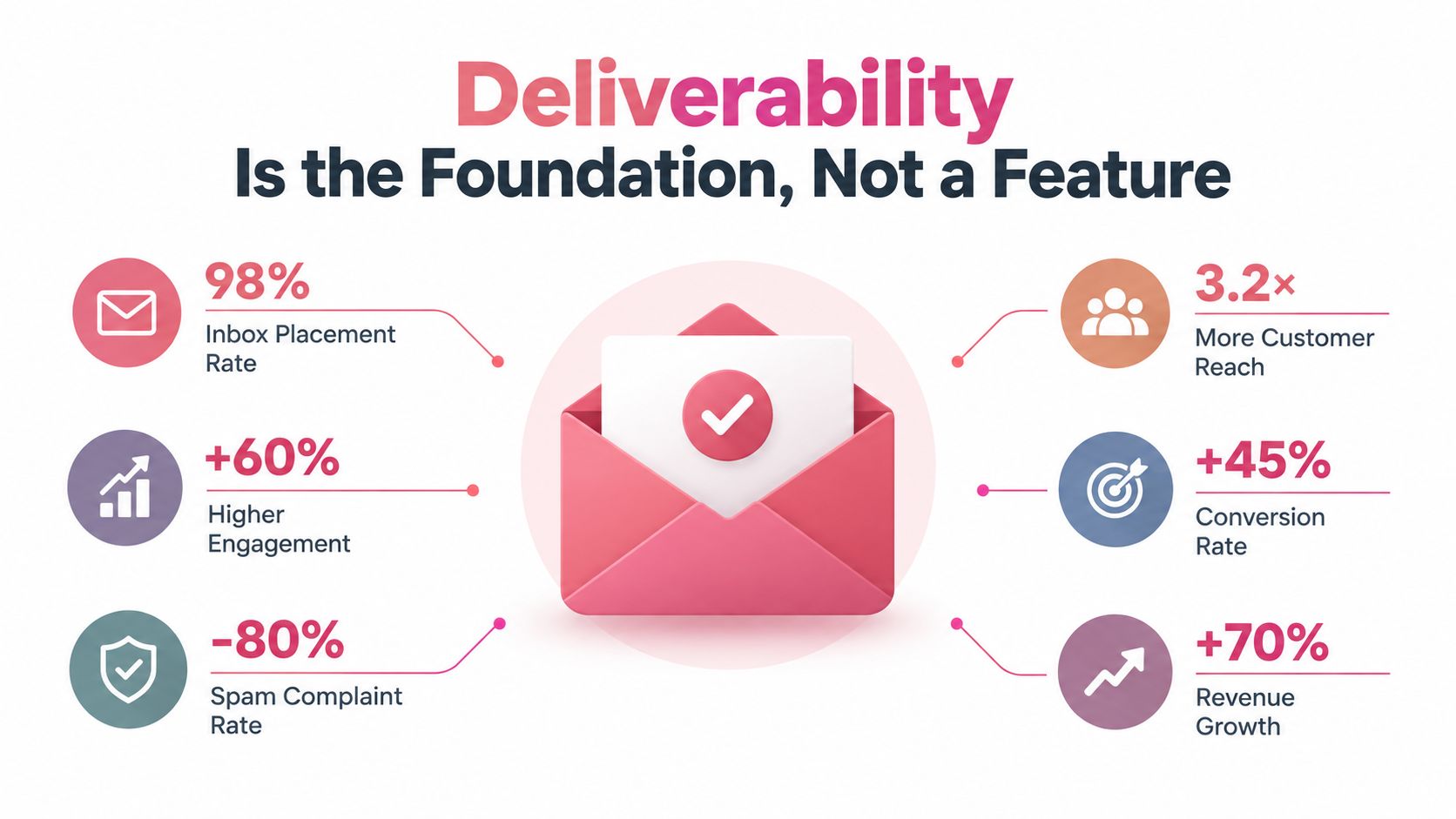
Inbox placement determines whether outbound can produce revenue. A strong subject line earns nothing if the message lands in spam, and a compelling offer cannot repair a damaged sending domain. Treat deliverability as the operating layer that protects every reply, meeting, and pipeline metric downstream.
The benchmark gap is material. One 2026 review reported 83.1% average deliverability across 15 major sending platforms, while another source describes 95% to 98% as the ideal range (EmailChaser). A separate benchmark defines healthy cold email as above 95% delivery, above 82% inbox placement, below 3% bounce rate, and below 0.1% spam complaints (Warmforge). Buyers should therefore inspect the infrastructure beneath the interface, not reward a sequence builder for promising unlimited sends.
What the platform should control
A credible system should support:
- Dedicated sending domains and mailbox isolation, keeping prospecting activity away from the primary corporate domain.
- Adaptive warmup, increasing activity gradually instead of treating a new mailbox like an established sender.
- Mailbox rotation and routing, distributing activity and responding to provider behavior.
- Spam trigger monitoring, including complaint signals, bounce changes, and authentication failures.
- Inbox placement testing, using controlled recipient environments to check whether messages reach inboxes or spam folders.
Provider behavior differs. In 2026 benchmarks, Gmail averaged 68% inbox placement and 11% spam, Outlook or O365 averaged 71% inbox and 22% spam, and Apple Mail averaged 79% inbox and 15% spam (Genesis). A single sending rhythm across every provider wastes available performance. The platform should expose provider-level results and let RevOps adjust routing, volume, and cadence accordingly.
Why built in controls matter
Deliverability becomes expensive when added after the sequencer. A team that buys a volume tool, then adds separate warmup, verification, inbox testing, and monitoring products creates a fragile chain. Each handoff adds configuration work, failure points, and another subscription.
A neutral 2026 test found one platform reached 93.1% inbox placement using native tools and scored 9.4 out of 10 on its deliverability infrastructure index (Warmforge). That result does not make the platform right for every team, but it shows why native controls deserve more weight than an unlimited-send claim.
For implementation details, review Yalc's technical discussion of cold email deliverability. The operating priority is clear: protect inbox placement first, then tune copy, automation, and sequence volume.
Operating rule: A platform that cannot show mailbox-level health, bounce trends, complaint signals, and inbox placement leaves RevOps without enough information to manage sending risk.
Comparing the Four Platform Categories Side by Side
Most buying guides compare vendors inside one category. That misses the bigger decision. A team may be choosing between a high volume sequencer, a deliverability suite, a CRM native workflow system, or an AI SDR product. Those products solve different problems and leave different gaps.
Cold Email Platform Categories Compared on the Four Lenses
| Platform Category | Deliverability | Automation Depth | Personalization Quality | Compliance & Governance | Best Fit |
|---|---|---|---|---|---|
| Point sequencer, such as Instantly, Smartlead, or Lemlist | Strong rotation and sending controls, but quality varies by setup | Strong email sequencing | Moderate, usually template and data driven | Basic to moderate | Lean teams prioritizing outbound execution |
| Deliverability suite, such as Mailreach or Warmbox | Strongest foundation and testing | Limited sequencing depth | Low to moderate | Moderate, often focused on sending health | Teams that already have a sequencer |
| Workflow OS, such as Outreach or Salesloft | Strong CRM coordination, weaker cold specific controls | Strong multichannel orchestration | Strong when data and CRM fields are clean | Moderate to strong, depending on configuration | Established sales teams with structured processes |
| Full SDR replacement, such as 11x, Artisan, or AiSDR | Bundled controls vary and can be difficult to inspect | Very high, with agent led execution | Potentially high, but dependent on data quality | Variable, with lock in risk | Teams willing to adopt one packaged motion |
The point sequencer is efficient when the team already understands list quality, mailbox limits, and compliance workflows. Its weakness is that the interface can make sending volume feel like the primary optimization target.
The deliverability suite is the opposite. It protects the foundation but usually won't manage complex branching, call tasks, LinkedIn actions, or reply qualification. It often becomes a companion purchase rather than a replacement.
The workflow OS brings structure to a larger revenue process. Outreach and Salesloft can coordinate sales activity around CRM stages, but a team running cold campaigns still needs to verify whether the system offers enough mailbox level controls and provider aware pacing.
Full SDR replacement tools promise a complete motion. That can reduce setup work, but it can also make the team's data, messaging, approval process, and reporting dependent on one vendor's assumptions.
For buyers comparing sequencing products, a focused vs Klenty review can add useful vendor level context. The broader lesson is to score the category before scoring the product.
Yalc's review of best sales engagement platforms in 2026 is also useful for mapping platform capabilities against the rest of the revenue stack. RevOps leaders should document what each existing system already owns before approving another contract.
Personalization and Automation Without Breaking Inbox Health
Personalization should improve relevance, not justify indiscriminate volume. AI can research accounts, adapt language, and draft replies, but every automated message still needs sending controls, review rules, and a clear stop condition. That is the operating boundary a cold email outreach platform must enforce.
Use three personalization tiers:
- Token merge: Inserts verified fields such as name, role, company, or trigger. It scales efficiently, but weak data produces mechanical copy.
- Semantic paragraph rewrite: Adjusts the opening or value proposition to match account context while keeping approved messaging and claims under control.
- Fully generated message: Creates the entire email from research and instructions. It provides the most variation, but demands stronger review, data restrictions, and approval thresholds.
AI output does not equal inbox safety. Independent industry coverage reports aggregate B2B cold email reply rates around 3.4% to 5.1%, with AI-assisted cold email averaging 6.8% in one benchmark, while high-volume AI-generated outreach often falls below 1% reply rate (ReadSignal). Use AI where account context makes the message more relevant. Do not use it only to multiply sends.
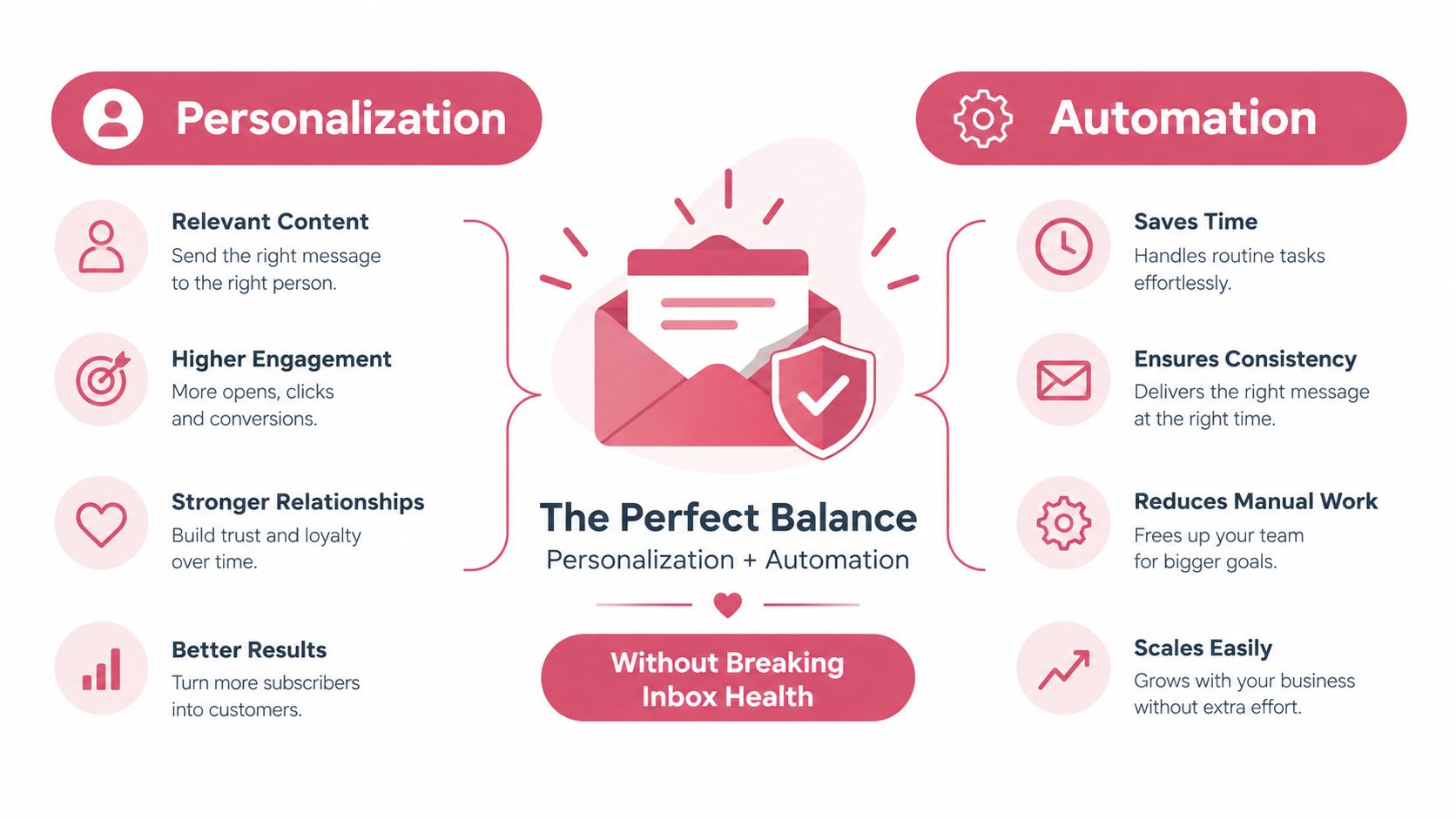
Configure the platform with:
- A ramped cadence, instead of a sudden blast.
- A per-mailbox limit, based on domain history and provider response.
- Auto-pause rules, triggered by rising bounces, complaint signals, or declining reply quality.
- Human approval for high-risk segments, including regulated industries and unfamiliar jurisdictions.
- One reply-classification layer, so positive and negative responses stop the sequence immediately.
Test personalization at the message level. Judge performance by qualified replies and meetings, not opens alone. Privacy filtering increasingly distorts open data, so open rates should not decide whether a campaign scales. Yalc's unified playbooks can centralize these review, pacing, and stop rules, while traditional sequencers may still suit teams that want separate controls for each outbound motion.
Compliance and Data Governance as a Deliverability Layer
Compliance belongs inside the sending workflow, not in a document reviewed after launch. Gmail and Yahoo tightened bulk sender rules in February 2024, and current benchmark guidance treats a spam complaint rate of 0.3% or higher as a breach risk, with under 0.1% as the safer operating target (Amplemarket).
The platform therefore needs to record who was contacted, why that person was eligible, where the data came from, and how an opt out was handled. That evidence supports legal review and helps protect sender reputation.
Rules differ by market. U.S. B2B outreach remains permitted under CAN SPAM when senders identify themselves accurately, avoid deceptive subject lines, include a physical address, and honor opt outs. EU and UK programs require more careful analysis of lawful basis, transparency, data minimization, source documentation, and objection handling. Canada's CASL and Brazil's LGPD add further considerations, so a global team shouldn't use one universal suppression rule.
Compliance Rules by Jurisdiction and Their Deliverability Impact
| Jurisdiction | Consent Model | Identification Rule | Platform Enforcement Feature |
|---|---|---|---|
| United States | CAN SPAM permits qualifying B2B commercial outreach with an opt out mechanism | Accurate sender identity, honest subject line, and physical address | Suppression management, unsubscribe processing, and message records |
| European Union and United Kingdom | Lawful basis, transparency, relevance, and objection handling must be documented | Clear identity and explanation of data use | Lawful basis fields, source records, approval trails, and regional suppression |
| Canada | CASL requirements are stricter and consent analysis is central | Clear sender details and compliant commercial message content | Consent status, evidence storage, and rapid suppression |
| Brazil | LGPD requires responsible handling of personal data and individual rights | Transparent processing information | Data access controls, purpose records, and deletion or suppression workflows |
A platform should also support SPF, DKIM, and DMARC alignment, monitor complaint rates, and process unsubscribes quickly. Compliance logs should be searchable by contact, campaign, jurisdiction, and operator.
Scraping creates another risk. Repeated collection from services such as LinkedIn or data platforms can violate terms of service and expose accounts or sending domains to enforcement. The RevOps owner should require documented data provenance and an approved acquisition method before any list enters the outbound system.
Multichannel Sequences and Why Email Only Underperforms
Email only sequences often stall because the prospect has no reason to recognize the sender. Adding channels can increase context, but only when the team coordinates the actions around one account hypothesis.
A 2026 multichannel benchmark reports that sequences using email, phone, and LinkedIn achieve 55% to 65% higher meeting conversion than email only sequences on the same prospect list. It also reports that the strongest sequences combine three channels over 8 to 10 touches across 18 to 21 days (Gangly).
A workable sequence might look like this:
- Day 1: Send a short email tied to a specific business problem.
- Day 3: View the prospect's LinkedIn profile and send a connection request with a relevant note.
- Day 6: Call a verified direct number and reference the same account hypothesis.
- Day 9: Send a follow up email that acknowledges the social signal or call attempt.
Each action should update lead scoring. A profile visit may confirm research activity. A connection acceptance can justify a softer follow up. A direct reply should stop every channel immediately.
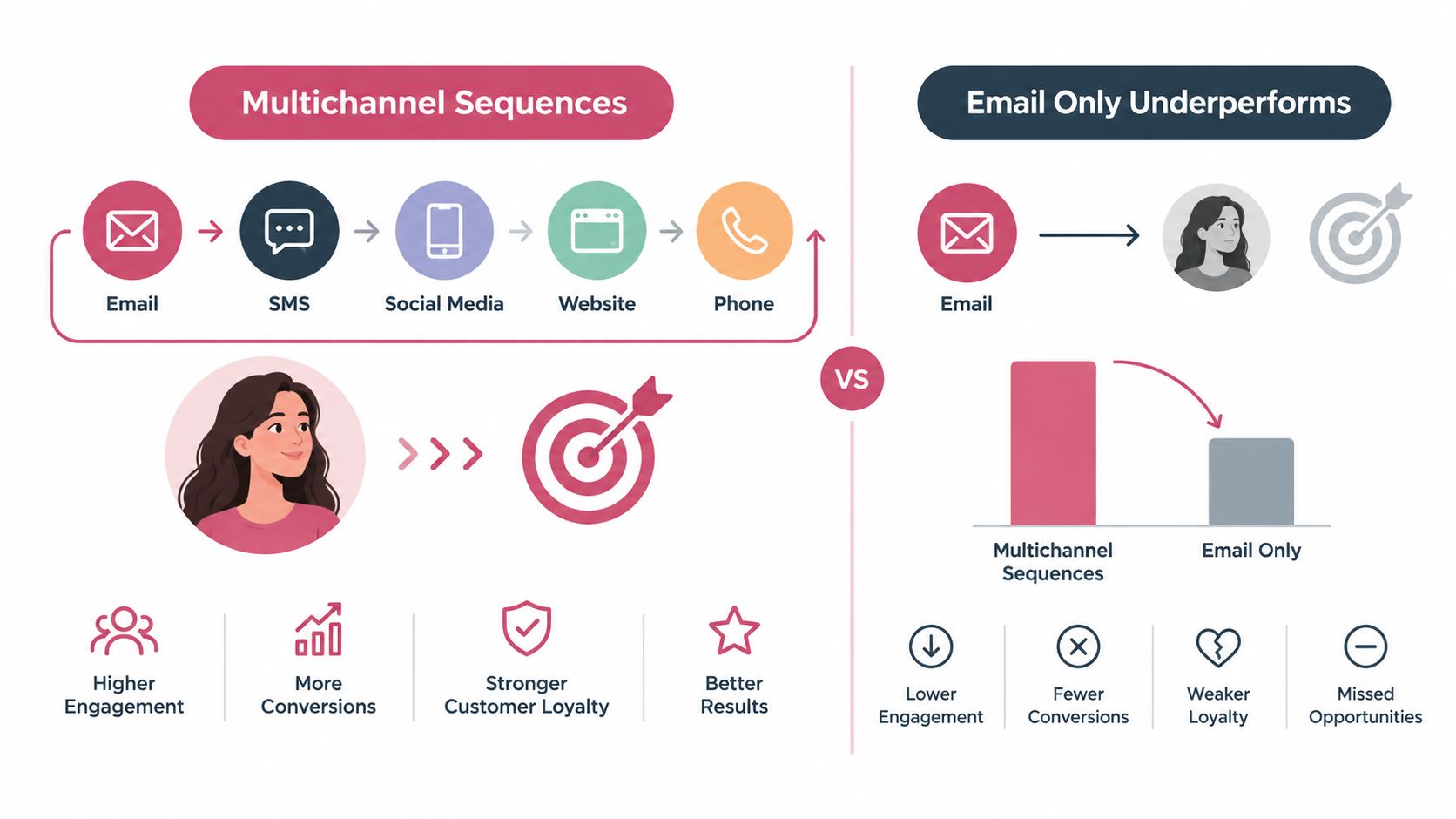
The operational cost is coordination. Teams that add LinkedIn and phone steps create attribution confusion, duplicated touches, and inconsistent messaging. The platform needs one playbook, one suppression state, and one activity record.
A useful guide to proven lead generation strategies can help teams decide which signals deserve a channel change. For LinkedIn execution details, RevOps leaders can also review this LinkedIn outreach strategy. The recommendation is to add channels only when each one contributes new evidence or a different path to response.
Decision Framework by Team Size and Motion
Team size matters less than operating complexity. A solo founder may need only a simple sender, while a small ABM team can need stronger governance than a larger organization with broad, low touch outreach.
Platform Fit by Team Archetype and Motion
| Team Archetype | Monthly Volume | Recommended Starting Category | Known 6 Month Gap | Where Yalc Fits |
|---|---|---|---|---|
| Solo founder with a narrow ICP | Under 500 emails | Point sequencer with basic deliverability controls | Manual research, reply routing, and reporting become repetitive | Adds structured research and play execution beside the sender |
| Five rep SDR team running ABM | Defined account lists and controlled sequences | Workflow OS or sequencer plus deliverability suite | Cross channel coordination and approval workflows become difficult | Orchestrates account research, personalization, sequencing, and replies |
| Thirty rep revenue organization with strict governance | Large coordinated program | Workflow OS with dedicated deliverability controls | Jurisdiction records, auditability, and provider specific monitoring need more depth | Provides unified playbooks, scoped access, approvals, and telemetry |
The solo founder should avoid a full SDR replacement. That category adds cost and operational dependency before the founder has enough campaign evidence to define a repeatable motion. The default recommendation is a point sequencer, a verified list, conservative mailbox controls, and manual review of every positive reply.
The five rep SDR team usually needs the most balanced setup. An outbound led product led growth motion may favor a sequencer with strong routing, while enterprise sales assist requires CRM stages, account research, phone tasks, and human approvals. The default recommendation is a workflow system or sequencer paired with a deliverability layer, unless one platform can prove it handles both.
The 30 rep organization should prioritize governance before agent autonomy. It needs jurisdiction aware eligibility, suppression synchronization, approval trails, and reporting that separates provider, domain, mailbox, campaign, and rep performance. High touch enterprise motions generally benefit more from deliverability controls plus CRM native sequences than from an opaque full SDR replacement.
Yalc fits as an orchestration layer when the team wants one operating playbook across research, enrichment, scoring, email, LinkedIn, reply handling, and reporting. It can also complement an existing sender by preparing and routing qualified outreach rather than replacing the sending infrastructure. The deciding test is whether the current stack already owns execution reliably or only schedules messages.
Underserved Questions Buyers Actually Ask
What send volume can one inbox handle? There isn't a universal safe ceiling. Industry guidance commonly recommends conservative daily limits, but the verified benchmark data points to the more important controls: healthy programs should maintain above 95% delivery, above 82% inbox placement, below 3% bounces, and below 0.1% complaints (RevenueFlow). Volume should rise only when those metrics remain stable.
Should the team centralize sending or distribute it? Distribution is usually safer because mailbox and domain health can be isolated. Provider behavior also differs, so mailbox level routing and provider specific pacing are more useful than one shared sending pool.
How can buyers verify reply rate claims? Run a controlled pilot against the team's own ICP, data source, domains, and seed list. Compare inbox placement, bounce rate, complaint signals, qualified replies, and meetings. Don't accept a vendor's aggregate reply rate as a forecast for a new program.
Does HubSpot, Salesforce, Outreach, or Salesloft already cover sequencing? Often, yes. The new platform is justified only when it adds a missing capability, such as cold specific deliverability controls, better data orchestration, jurisdiction records, or unified multichannel execution. Otherwise, it creates duplicate fields, competing stop rules, and unclear ownership.
The next step is to build a weighted scorecard across deliverability infrastructure, automation depth, personalization quality, and compliance governance, then pressure test two finalists in a controlled pilot before signing a long contract.
Yalc provides unified GTM playbooks that can coordinate prospecting, enrichment, ICP scoring, personalized outreach, reply handling, and reporting while connecting to the sending tools a team already uses. Visit Yalc to evaluate whether its orchestration layer can replace disconnected outbound tools or strengthen an existing cold email outreach platform.