10 Competitive Intelligence Tools That Win Deals

Businesses with defined competitive intelligence KPIs reported direct revenue impact far more often than those without them, 78% versus 20%, according to a published CI measurement summary. The findings don't establish causation, but they expose a useful buying distinction: collecting competitor information isn't the same as improving a commercial decision.
Monitoring alone changes nothing. A pricing alert needs an owner, a verified interpretation, and a destination, such as an opportunity record, an updated objection response, or an approved outbound play.
Competitive intelligence tools fall into four practical buying categories. Company data and orchestration tools support account research and execution. Competitive enablement platforms turn competitor developments into seller guidance. Market research platforms help analysts investigate companies and industries. Digital benchmarking and page monitoring tools track search performance, online demand, and specific website changes.
Buy for the decision and its destination, not for the largest stream of alerts.
A founder tracking competitor pricing needs a different system from a product marketing team maintaining battlecards. A sales organization facing repeated competitive objections needs deal evidence, while a growth team investigating acquisition channels needs digital benchmarks.
Team size matters because someone must review the output. Sales motion matters because transactional outbound and complex evaluations require different evidence. The existing GTM stack matters because useful intelligence should reach the CRM, collaboration channel, or campaign workflow where someone can act.
Table of Contents
- 1. Tools Crustdata
- 2. Klue
- 3. Crayon
- 4. Kompyte
- 5. Contify
- 6. Feedly Market Intelligence
- 7. AlphaSense
- 8. Similarweb
- 9. Semrush
- 10. Visualping
- Top 10 Competitive Intelligence Tools: Feature Comparison
- How To Plug Intel Into Pipeline
1. Tools Crustdata
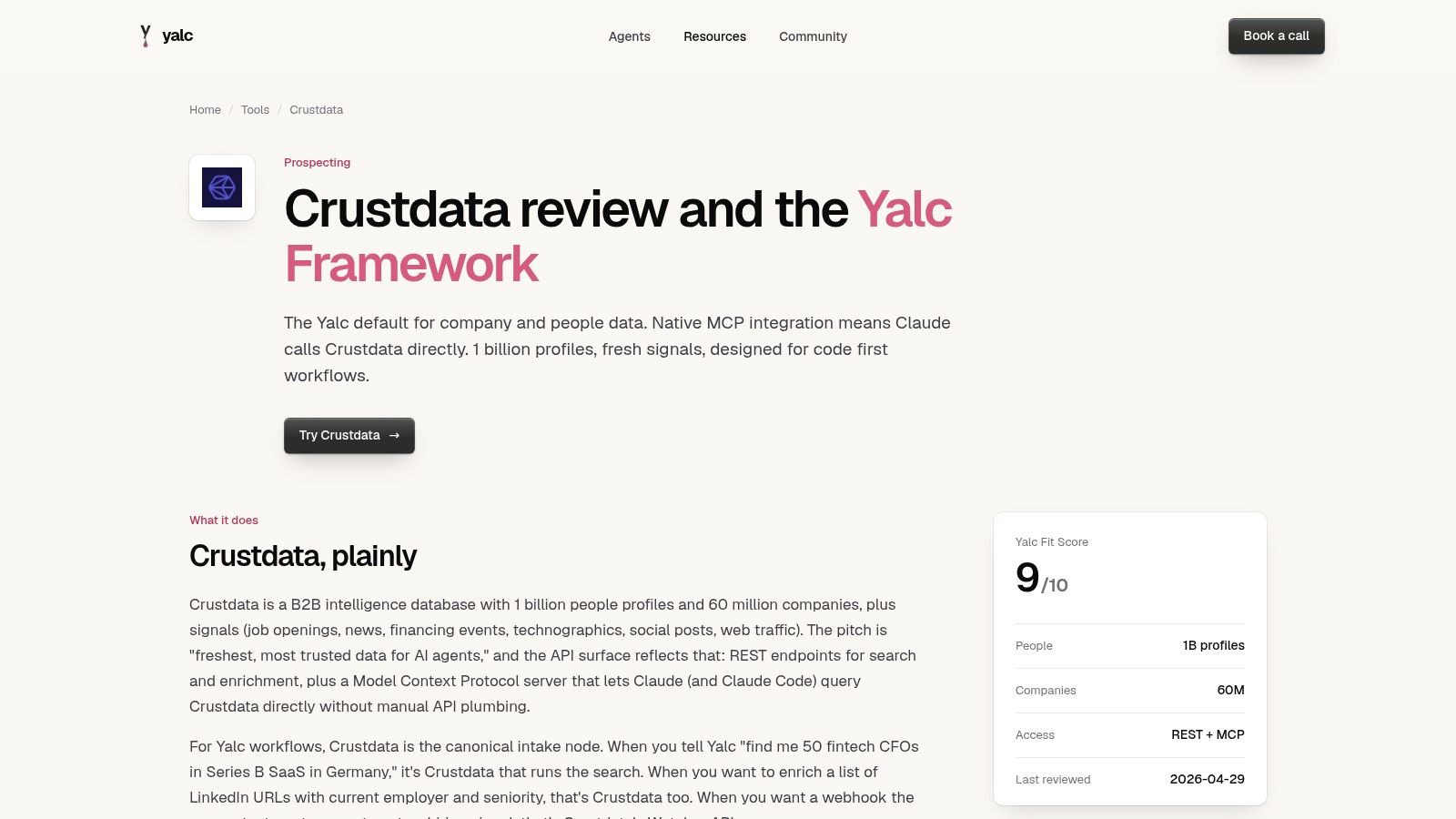
Best buying category: company data for connected GTM workflows. Crustdata through Yalc brings company firmographics and profile data into the same workflow as prospecting, enrichment, qualification, and outreach. Its role is different from a battlecard platform: it supplies company context that teams can use when deciding which accounts deserve attention.
That distinction makes it useful for teams connecting competitive research to account selection. A proposed workflow could combine an approved competitor insight with Crustdata company information, check the account against the team's ICP, and prepare relevant outreach. The company data provides context, not proof that an account uses a competitor or intends to buy.
Where the connection matters
Yalc places Crustdata behind its unified GTM API alongside other providers and integrations. Teams can combine that data with LinkedIn workflows, CRM records, enrichment, and outbound execution while applying their own positioning and qualification rules.
For teams evaluating tools for tracking LinkedIn buying signals, the important distinction is between a signal and the account context needed to assess it. Neither should substitute for evidence of actual buyer intent.
- Strength: Company firmographics and profiles can support connected research, qualification, and outreach rather than requiring a separate handoff.
- Flexibility: Yalc's provider agnostic approach lets teams organize workflows around their chosen sources and accumulated GTM knowledge.
- Limitation: The available directory information doesn't establish Crustdata's coverage, pricing, specific features, or setup requirements.
Evaluate data fit before workflow breadth. Ask for representative records from the target market, inspect field completeness and freshness, and establish which fields the intended play requires. Then confirm access requirements and commercial terms.
Crustdata deserves consideration when company context is missing from an otherwise workable GTM process. It shouldn't be purchased as a substitute for competitor monitoring, verified product comparisons, or feedback from lost deals.
2. Klue
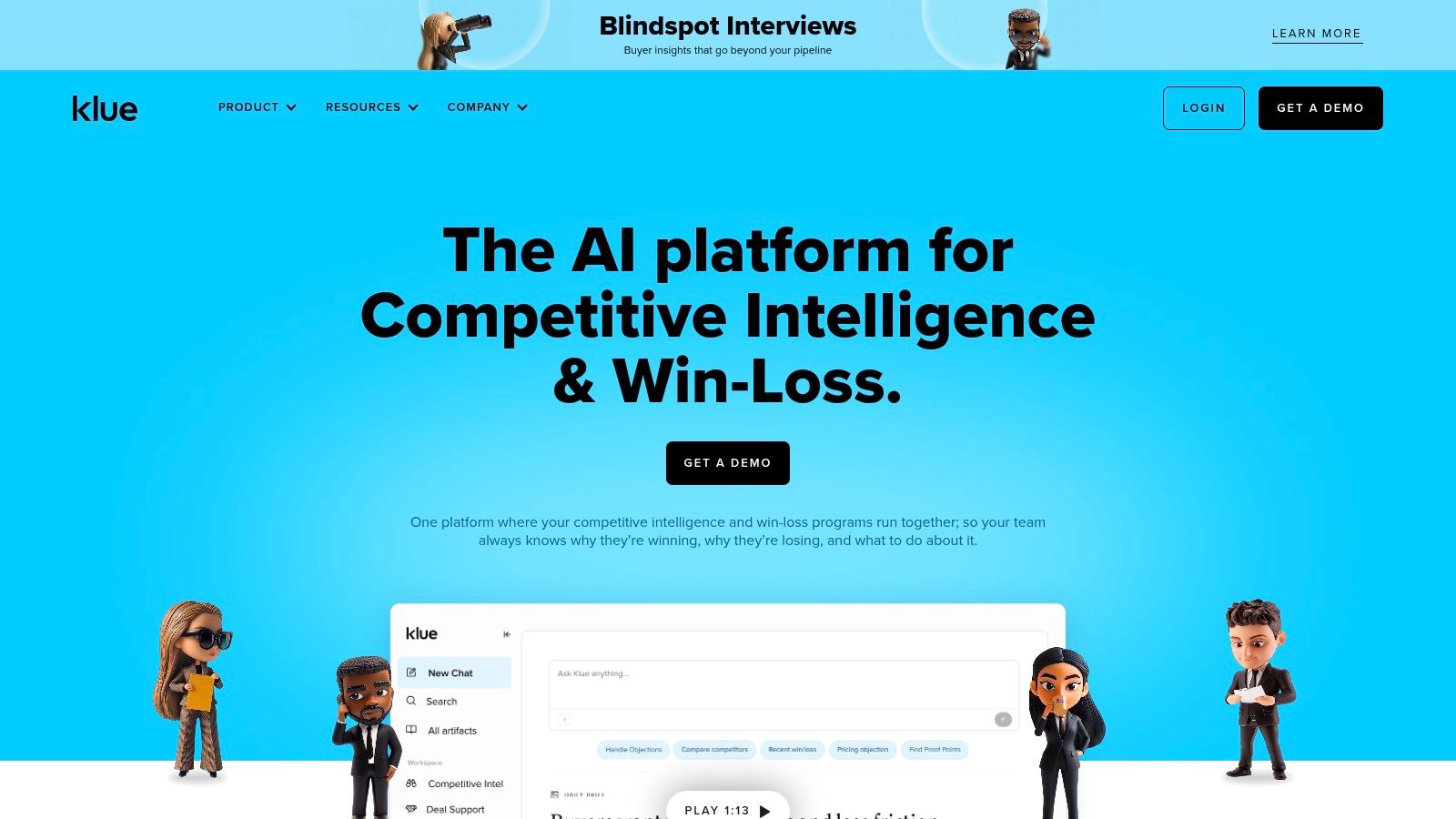
Choose Klue when sellers need better competitive answers, not just more competitor news. Klue combines competitor monitoring, centralized competitive content, battlecards, and win/loss analysis. Its strongest fit is a product marketing or enablement team that wants to connect external developments with what buyers say during actual evaluations.
The practical advantage is the combination of market evidence and deal feedback. A competitor's website may emphasize a capability, but win/loss research can help a team investigate whether buyers care about that capability and how it affects positioning. Klue also offers AI assisted answers to competitive questions, including access through Claude.
Test the seller experience
A useful demonstration starts with a real objection from a recent opportunity. Ask the vendor to show the supporting evidence, the approved response, and how a seller retrieves that response during normal work.
- Pros: Competitive monitoring and win/loss analysis sit within the same enablement approach, helping teams connect competitor claims with deal experience.
- Cons: Pricing requires a sales conversation, and the platform may exceed the needs of a team that only wants website change alerts.
- Buying caution: Available review ratings draw on relatively small samples. Treat them as prompts for reference conversations, not a decisive ranking.
Stack destination: seller guidance linked to competitive opportunities. Assign product marketing responsibility for approved answers and give sales a way to challenge stale guidance. During evaluation, verify that the intended delivery workflow works with the team's existing systems and permissions.
3. Crayon
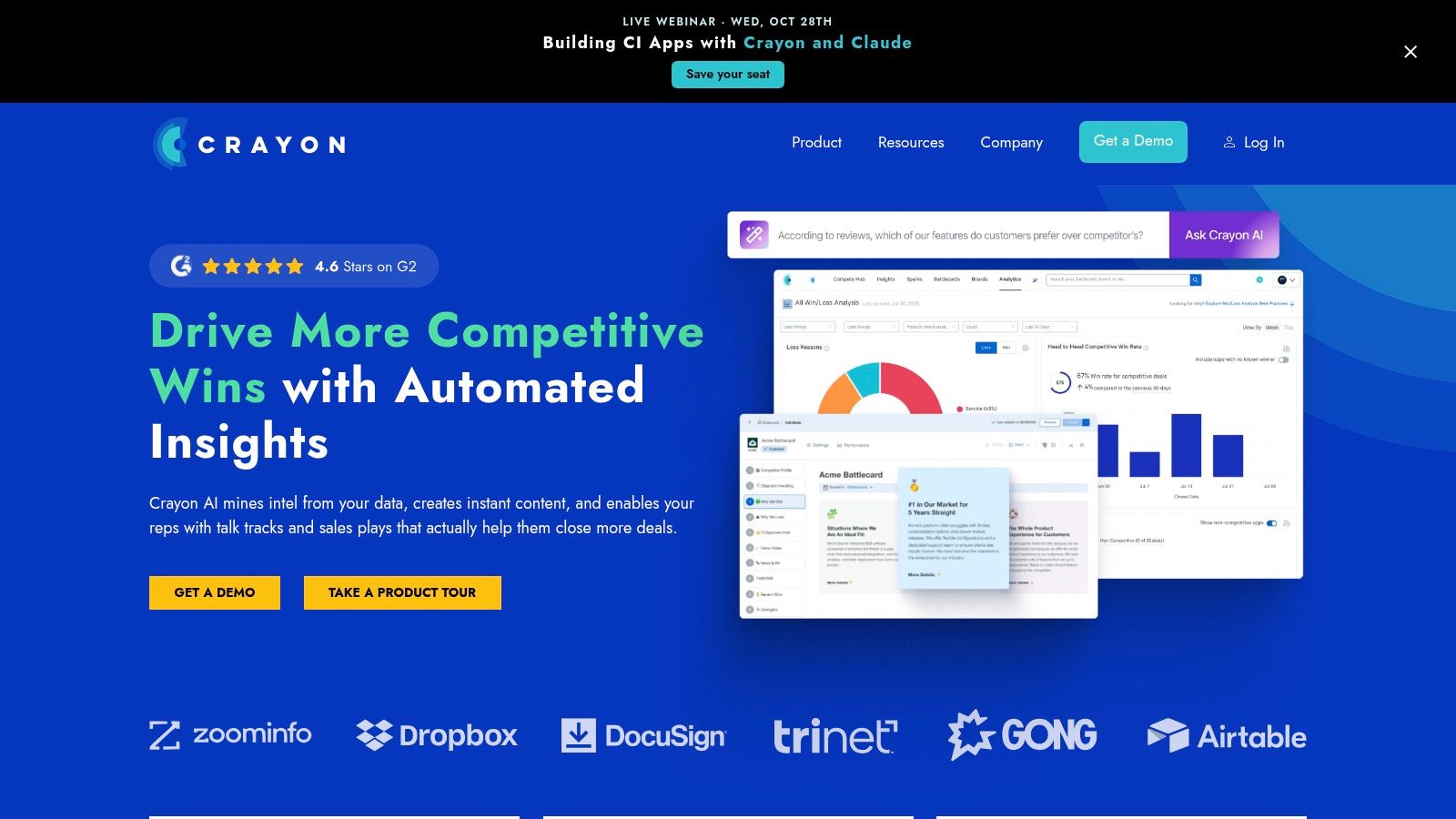
A competitor announcement becomes useful when someone turns it into a defensible sales response. Crayon fits competitive enablement teams that need that translation process. Crayon monitors competitor activity and helps teams turn findings into battlecards, sales emails, and SWOT analyses.
Its Sparks AI capabilities are intended to reduce research work and help maintain competitive content. Sharing options include sales workflows and collaboration tools such as Slack and Microsoft Teams, giving teams destinations beyond another research dashboard.
An AI drafted response should remain a draft until someone checks the underlying claim and approves the positioning.
That review requirement matters most when an apparent product change could affect active deals. A revised headline doesn't necessarily mean a new capability, and a product announcement doesn't establish availability for every customer segment.
Buy for maintained guidance
The upside is a platform designed to connect competitor developments with sales materials. Teams struggling to update battlecards should evaluate whether Crayon reduces the work between discovering a change and publishing an approved response.
The trade off is investment and ownership. Pricing requires a custom quote, and a team monitoring only a handful of public pages may not need a full enablement platform.
For a practical trial, provide an old battlecard and a recent competitor change. Ask Crayon to demonstrate how the change is identified, interpreted, reviewed, and distributed. Confirm that sellers can distinguish approved guidance from an unreviewed AI suggestion before making the platform part of the sales process.
4. Kompyte
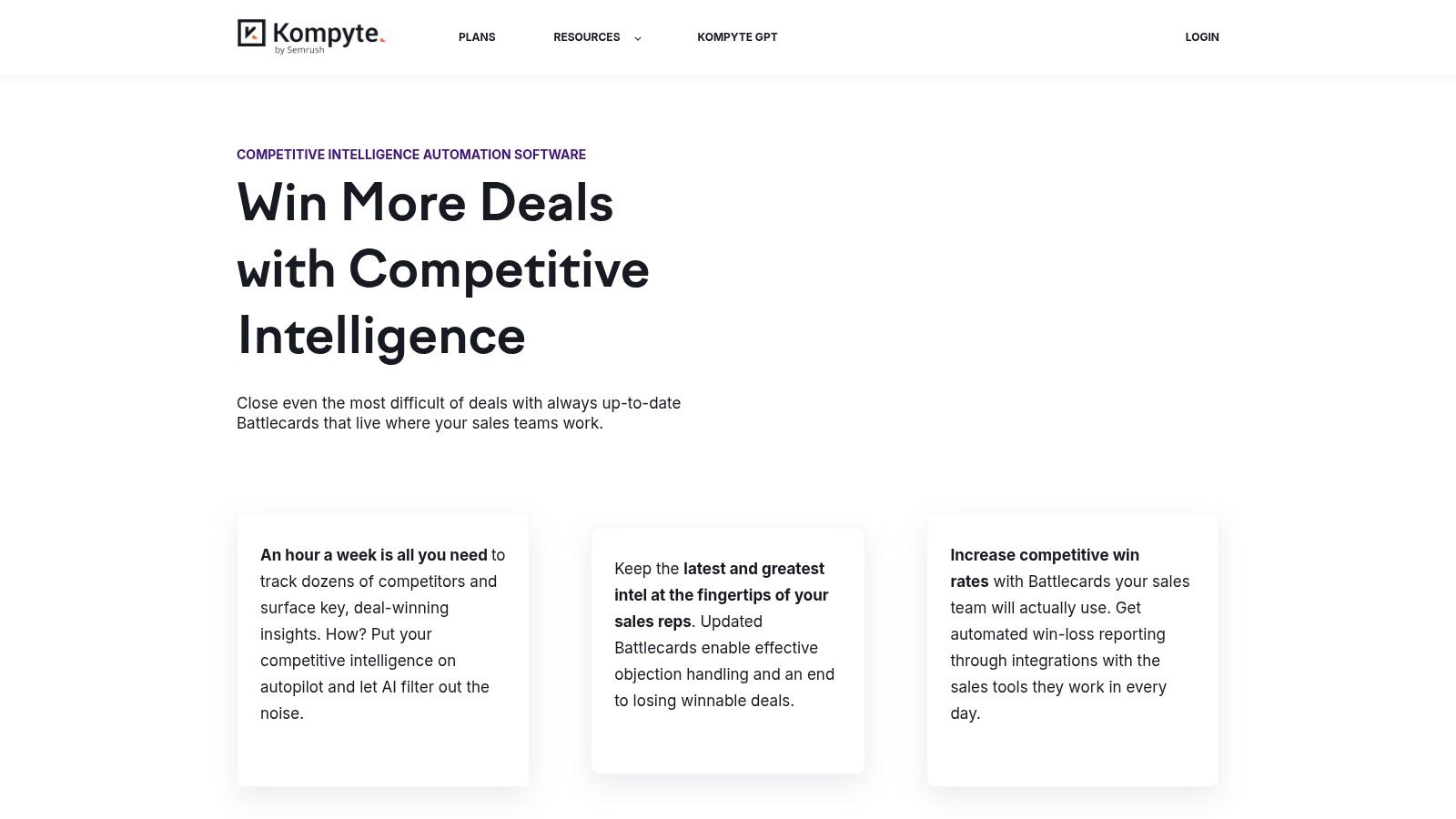
Kompyte belongs on the shortlist when CRM delivery is central to the purchase. Kompyte, part of Semrush, combines competitor monitoring with alerts, company profiles, reports, and battlecards for sales, marketing, and product teams.
Its integrations include Salesforce, HubSpot, Slack, and Microsoft Teams. AI curated insights and automated company profiles support the collection side, while battlecards and reports provide formats for distributing the findings.
- Best fit: Teams that need competitor tracking and sales materials within an established CRM and collaboration environment.
- Commercial structure: Quotes depend on competitor coverage, user licenses, and access requirements. Listed plans are annual, although shorter arrangements may be available at a premium.
- Included support: The vendor describes onboarding, integrations, and ongoing customer support as included. Confirm the scope in the proposal.
Inspect routing and permissions
The evaluation should follow an actual opportunity. Ask how a seller finds the relevant battlecard, how an editor approves changes, and what happens when a competitor becomes relevant to a deal.
Don't accept the presence of an integration logo as proof that the workflow fits. Verify record matching, access controls, update behavior, and who maintains the connection after onboarding.
The main trade off is breadth versus administrative effort. Kompyte offers more than page monitoring, but that broader capability still needs ownership. A surfaced Gartner Peer Insights comparison placed it below Klue on rating, based on limited review samples. That's weaker buying evidence than a successful test using the team's own competitive scenario.
5. Contify
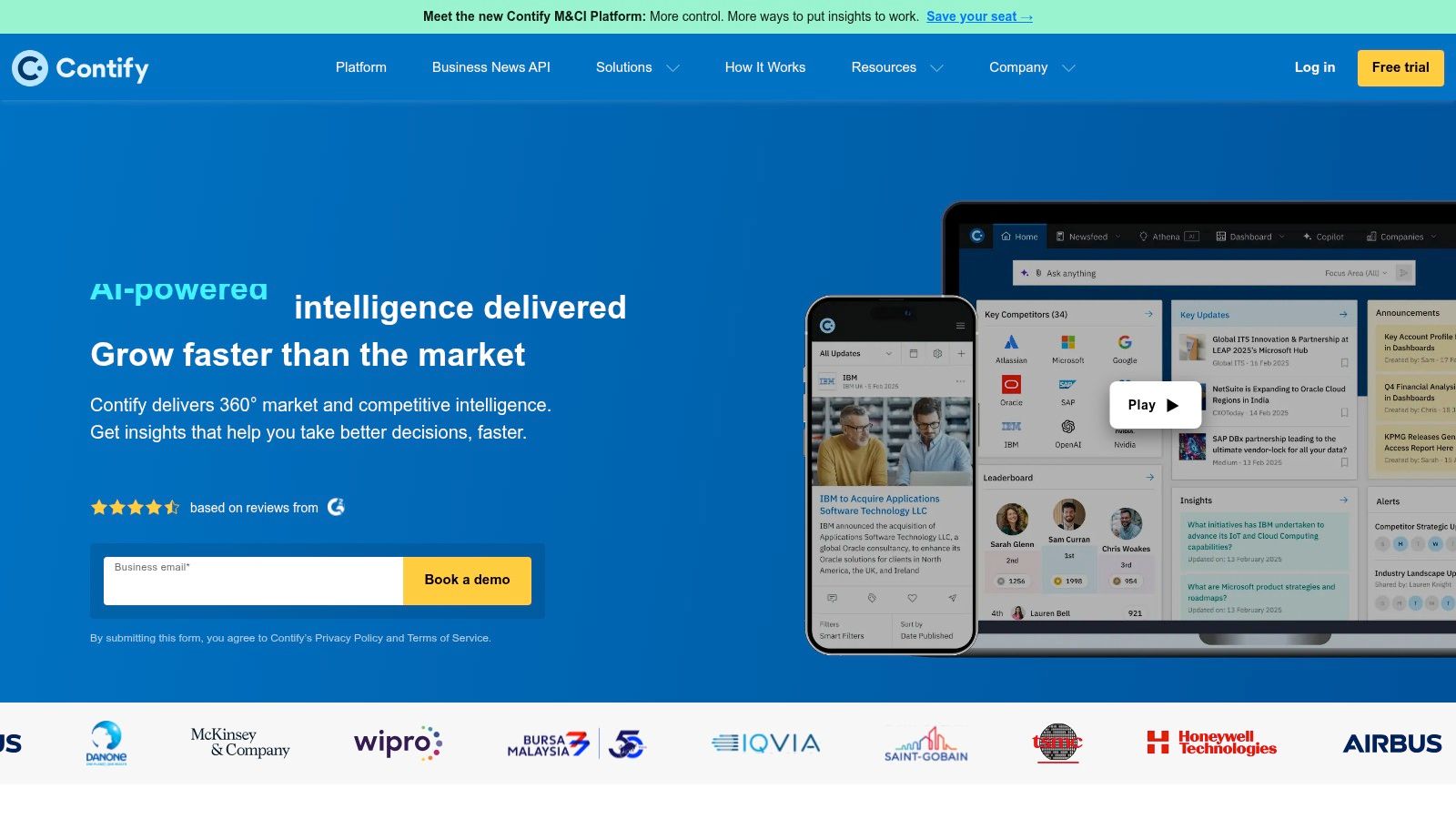
Contify fits teams buying market intelligence across more than direct competitors. Contify monitors competitors, customers, partners, industries, and emerging trends, drawing on company websites, news, social sources, and filings. It is a market-research and intelligence platform, rather than a specialist for traffic or SEO metrics.
AI-assisted extraction, question answering, dashboards, battlecards, and timelines give strategy, product, and commercial teams different ways to work with the same external developments. Evaluate it on source relevance, how easily analysts can validate findings, and whether outputs fit the decisions each team makes.
Start with a business question
Define a research question before adding sources. For example, to assess whether a competitor may be entering a new segment, track relevant product documentation, partnership announcements, customer news, and other developments. Treat patent filings as signals, not proof of a launch, and keep interpretation separate from the filing itself, as explained in this guide to structured patent and trademark monitoring.
Broad coverage brings a curation cost. Teams need to select sources, design a useful taxonomy, and review what the system surfaces.
- Pros: Monitors strategic entities beyond direct competitors and supports several ways to share findings.
- Cons: Source selection, taxonomy design, and ongoing curation take staff time. Teams focused mainly on traffic or SEO metrics should assess a specialist tool.
- Pricing: Public pricing wasn't available in the product information. Ask for a quote based on the entities, sources, and deliverables your team needs.
6. Feedly Market Intelligence
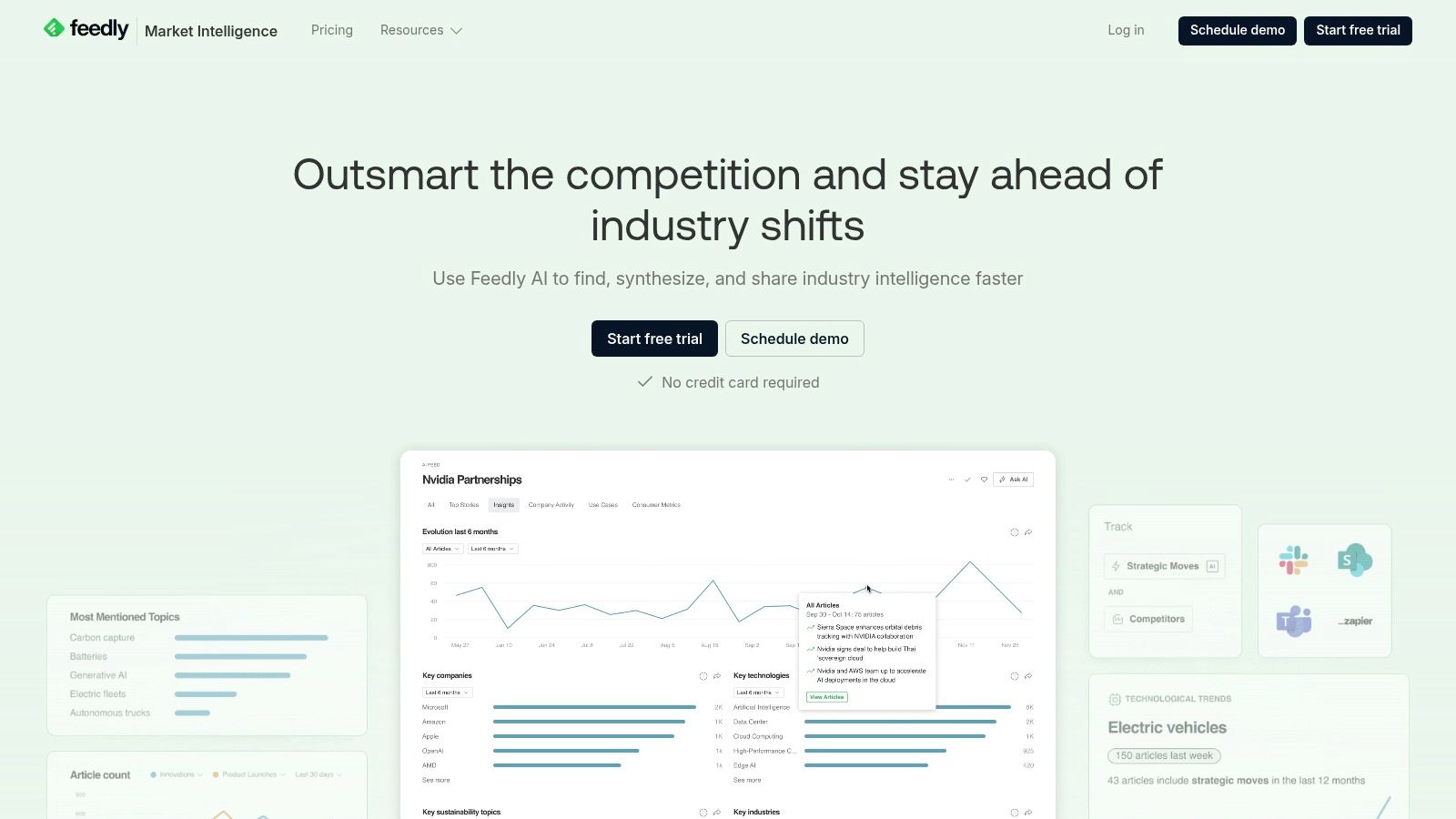
Feedly Market Intelligence suits teams whose main problem is keeping up with industry coverage. Feedly Market Intelligence brings company, topic, and market monitoring into AI Feeds, with summaries, cited answers, collaboration boards, and newsletters.
Emerging Trends Dashboards and company or trend insight cards support ongoing research. API access is available on higher tiers, so buyers planning automated distribution should establish which plan includes the required access.
The distinction from competitive enablement platforms is important. Feedly is better considered a research intake and synthesis layer than a replacement for deal specific objection handling.
Tune sources before expanding coverage
Start with the publications, companies, and topics that affect a defined market decision. Review what the feed misses and what it repeatedly captures without producing a useful action.
Its strengths are consolidated industry reading, AI assisted synthesis, collaboration, and published pricing. Its limitations are the cost of team plans for smaller organizations and the work required to keep feeds relevant.
For social sources, use an explicit keyword taxonomy rather than a loose collection of brand mentions. Research distinguishes monitoring agreed metrics from interpreting themes and sentiment, a useful operating rule when configuring research feeds.
Stack destination: a reviewed intelligence brief. Route significant findings to a named editor, then distribute approved conclusions to the people responsible for messaging, product research, or sales guidance. Don't send every collected article to the entire revenue team.
7. AlphaSense
AlphaSense is the research intensive choice, not the default battlecard purchase. AlphaSense combines AI search with public and premium business information to support company, industry, and market analysis.
Its search and summarization tools help analysts extract relevant information across business content. The vendor also describes access to premium and proprietary sources, making content availability and licensing central evaluation questions.
A strategy team assessing a competitor's direction has different requirements from a sales team enriching accounts. The distinction between market research and sales intelligence software should be settled before comparing subscriptions.
Evaluate evidence access
Ask the vendor to investigate a genuine market question using the content available under the proposed contract. Inspect the underlying documents, the context surrounding each conclusion, and the permitted ways to share findings internally.
- Pros: Multiple business information types sit within a common research experience, supporting deeper company and market investigation.
- Cons: The scope may exceed a startup's routine monitoring needs, and research output still needs translation into sales actions.
- Commercial caution: Public pricing wasn't available in the supplied information. Confirm user access, content entitlements, and sharing rights.
A surfaced Gartner Peer Insights comparison showed a strong user rating, but review populations and use cases vary. The better test is whether analysts can support a consequential recommendation with evidence they can inspect and explain.
Stack destination: an approved research conclusion. Extract the findings relevant to positioning or account strategy rather than pushing an entire research document into a seller's workflow.
8. Similarweb
Choose Similarweb to investigate where competitors attract online demand. Similarweb centers competitive analysis on website traffic, engagement, audience behavior, acquisition channels, search, and market comparisons.
That makes it a digital benchmarking purchase. Growth and demand generation teams can use it to investigate channel patterns and audience overlap, but it doesn't replace sales call evidence or approved competitive responses.
Estimated website activity is a research input, not access to a competitor's internal analytics.
This distinction should shape the action. An apparent channel shift can justify inspecting campaigns, landing pages, and search activity. It doesn't independently establish pipeline growth or the effectiveness of the competitor's spending.
Keep digital benchmarks in context
The advantages include comparisons across channels, markets, and regions, plus some free company analysis. The limitations include estimated performance data, limited relevance to sales objections, and pricing that may require a vendor conversation for broader access.
Teams assessing website traffic data for SEO teams should define the permitted data workflow and preserve the distinction between estimates and observed first party results. Connecting data to an internal report doesn't change its underlying certainty.
For GTM leaders comparing sales intelligence tools for account research and execution, Similarweb fills the digital market context role. It shouldn't be evaluated as though it provides the same evidence as CRM history or buyer conversations.
Stack destination: a channel hypothesis. Assign a growth owner to investigate the finding and test its relevance before changing campaign priorities.
9. Semrush
Semrush is the practical pick for competitive search research. Semrush helps SEO, content, growth, and paid search teams examine competitor keywords, pages, backlinks, and search visibility.
Domain Overview, Keyword Gap, domain comparisons, backlink research, and AI visibility tools support that work. The useful output is a specific marketing decision, such as which comparison page to improve, which topic to investigate, or which paid search message to test.
This is not a full competitive enablement platform. A keyword gap doesn't explain why a buyer chose a rival, and a backlink report doesn't establish product superiority.
Turn gaps into assigned work
Use a competitor domain to identify a relevant search opportunity, inspect the actual results and landing pages, and compare them with the company's existing content. Assign work only when the topic matches the ICP and a commercial purpose.
- Pros: Detailed keyword, page, backlink, and paid search research can support concrete SEO and content decisions.
- Cons: Performance estimates are directional, the feature range takes time to learn, and plan limits require careful review.
- Trial: A Semrush product page lists a seven day trial, subject to current availability and terms.
Stack destination: a prioritized content or search task. Keep the research attached to the proposed action so the owner can inspect the rationale.
When the task involves a competitor comparison page, separate discoverability from factual accuracy. Search research can identify a topic worth covering, but product claims still need current documentation and an approval process before publication.
10. Visualping
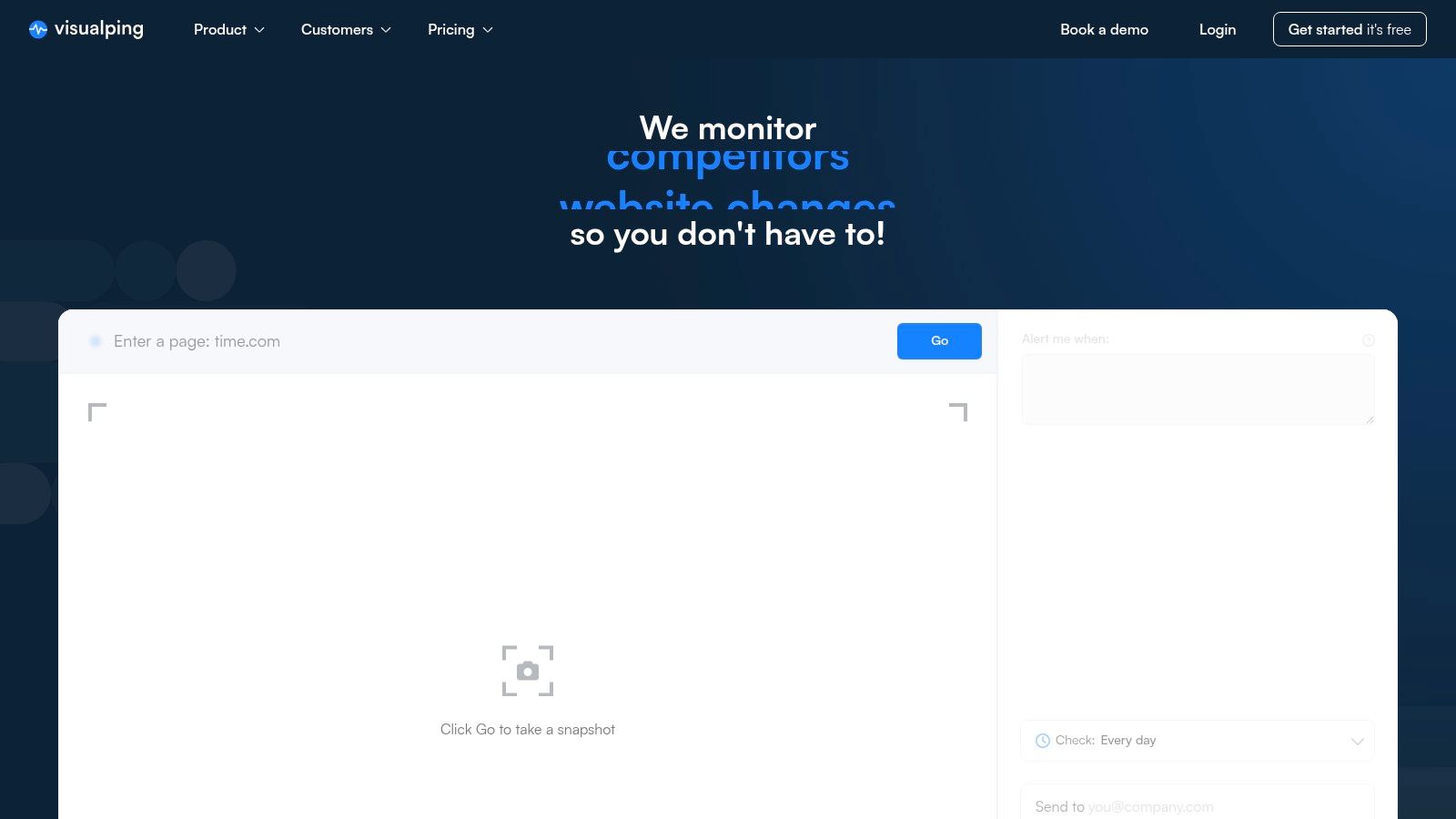
Visualping is the focused choice when the question is whether a specific competitor page changed. Visualping monitors whole pages or selected elements and supports visual, text, and code change detection.
Pricing pages, product descriptions, and positioning pages are useful candidates. Teams can watch the relevant content without buying a broader market research or enablement platform.
The limitation is interpretation. A changed price display may reflect packaging, billing presentation, or another adjustment that requires investigation. Detecting the edit doesn't settle its commercial significance.
Monitor the smallest useful area
Select the page section that answers the business question. Assign an owner to review changes and record whether each alert deserves an update to sales guidance or further research.
The upside is a direct monitoring workflow for narrowly defined pages. The downside is alert tuning, especially when redesigns or irrelevant edits create activity that doesn't affect a decision.
Limited Gartner Peer Insights feedback describes ease of use for competitor insights, but the sample shouldn't outweigh a test on the actual pages the team needs to monitor. Evaluate accessibility, alert relevance, and review effort during that test.
Teams comparing signal tracking tools should separate detection from qualification and execution. Visualping belongs at the detection stage.
Stack destination: a review queue. Send material changes to the responsible analyst or product marketer, not directly into prospect messaging. Only an approved interpretation should reach battlecards, CRM notes, or outbound plays.
Top 10 Competitive Intelligence Tools: Feature Comparison
| Tool | Core Focus & Features | GTM Value | Best For | Pricing |
|---|---|---|---|---|
| Crustdata via Yalc | Firmographics and profile data in Yalc's unified GTM API | ✨ Enriches prospecting and qualification with ICP knowledge; provider-flexible | 👥 Teams running data-backed GTM plays in Yalc | 💰 Crustdata pricing not specified |
| Klue | Competitor monitoring, win/loss analysis, battlecards | 🏆 Connects market signals to seller-ready guidance | 👥 Product marketing and sales enablement teams | 💰 Quote-based |
| Crayon | Competitor monitoring, AI analysis, battlecards and sales content | ✨ Turns competitor changes into sales actions and shares insights in Slack or Teams | 👥 Sales and marketing teams tracking competitors | 💰 Quote-based |
| Kompyte | Competitor alerts, company profiles, reports and battlecards | ✨ Combines monitoring with CRM and collaboration integrations | 👥 Sales, product and marketing teams | 💰 Quote-based; annual plans |
| Contify | Broad monitoring across competitors, industries, customers and more | 🏆 Organizes signals into dashboards, timelines and insights | 👥 Teams with wide-ranging market intelligence needs | 💰 Contact vendor |
| Feedly Market Intelligence | AI Feeds, summaries, trend dashboards and research collaboration | ✨ Tracks news and industry sources in one place | 👥 Teams following market, technology and competitor developments | 💰 Published plans; team tiers may cost more |
| AlphaSense | AI search across business research and premium content | ★ Strong for in-depth company and market research | 👥 Analysts, strategy teams and research-heavy organizations | 💰 Contact vendor |
| Similarweb | Web traffic, audience, channel and search benchmarking | ✨ Compares competitors' digital performance and demand sources | 👥 Digital marketing and GTM teams | 💰 Some free analysis; broader pricing varies |
| Semrush | SEO, keyword, backlink and paid-search competitor research | ★ Reveals search and content gaps for digital campaigns | 👥 SEO, growth and demand-generation teams | 💰 Plan-based; check current pricing and limits |
| Visualping | Web-page and content-change monitoring | ✨ Alerts on changes to competitor pricing, products or messaging | 👥 Teams monitoring selected competitor pages | 💰 Plan pricing varies |
How To Plug Intel Into Pipeline
Buy the smallest capability that improves a defined revenue workflow. Competitive enablement platforms fit repeated sales objections. Research platforms fit market questions, digital specialists fit acquisition analysis, and page monitors fit targeted change detection.
Sales enablement was a CI use case for 82% of respondents in a 2026 survey of US B2B SaaS organizations. That makes seller delivery a sensible evaluation priority, but it doesn't mean every organization needs a dedicated enablement platform.
Require evidence before action
Test each shortlisted tool against a real competitive question. Require the source URL, collection date, relevant excerpt, affected segment, and a clear distinction between an observation and an interpretation.
AI quality deserves particular scrutiny. 53% of respondents in a life sciences competitive intelligence survey expressed concern about output quality and hallucinations. That sector specific finding isn't a universal benchmark, but it supports asking how the proposed workflow exposes uncertainty and handles human approval.
Approval rule: An unverified competitor claim can become a research task. It shouldn't become an outbound assertion.
Connect the output to an owner
Use an explicit route from collection to execution. The operational model of monitoring, collecting, classifying, processing, and analyzing information provides a useful foundation.
- Battlecards: Product marketing approves the interpretation, updates the response, and records the evidence and review date.
- CRM records: Revenue operations attaches relevant guidance to affected accounts or opportunities and identifies the responsible seller.
- Outbound plays: An operator checks ICP relevance, approves messaging, and measures the resulting campaign rather than assuming the signal indicates intent.
Yalc can serve as the orchestration layer across those steps. Its unified GTM API connects data and execution tools, while its knowledge layer applies the team's ICP, voice, positioning, and previous results. Teams can compose plays through the Yalc MCP in Claude Code or run configured playbooks from Slack and the Yalc UI.
Price the work around the subscription
Compare implementation, source configuration, review time, interpretation, and distribution, not just the license. Guidance on competitive intelligence pricing and total cost emphasizes those operational costs and outcome measurement.
Track research time returned, time from signal to approved action, and results in competitive opportunities. Use lead generation insights from 100Signals as an additional planning resource, while keeping campaign decisions grounded in the team's own buyer evidence.
Start with a bounded workflow, a named owner, and explicit success criteria. Expand only when the team can show that the intelligence changed a decision and improved the work.
Yalc connects competitive research, company data, qualification, and outreach through a unified GTM API that applies your team's ICP, messaging, and accumulated knowledge. Visit Yalc to explore configured playbooks or compose a workflow that turns approved competitive signals into measurable sales actions.