Operational Audit Checklist: 8 GTM Checks
GTM automation should be audited before it's scaled, not after a campaign exposes a broken field, stale account record, failed webhook, or uncontrolled approval path. The practical reason is simple: a live revenue system has dependencies. Source data and institutional knowledge influence targeting. Integrations carry those decisions into execution. Measurement determines whether the play can be judged. Permissions and approvals control what the system may do. Execution records explain what happened.
This operational audit checklist follows that order. Each check should end with four concrete outputs: a named owner, an evidence record, a threshold that triggers action, and a corrective action with a due date. A checklist that only collects yes or no answers creates paperwork. A checklist that pauses execution when controls fail becomes part of operational control.
ISO 19011:2018 formalized a repeatable audit framework around principles, audit program management, execution guidance, evidence, reporting, and corrective action follow up. The standard's audit guidance also treats monitoring as part of improving the audit program, which is why this review should feed the next operating cycle.
Yalc is one relevant example of a system where unified access, play knowledge, approvals, and telemetry can be reviewed together. The point isn't the tool. The point is finding failure while the campaign is still a draft, not while prospects are receiving it.
Table of Contents
- 1. Data Pipeline Integrity and Source Validation
- 2. Campaign Instrumentation and Success Metric Definition
- 3. Approval Workflow and Human Escalation Governance
- 4. Play Performance Baseline and Comparative Analysis
- 5. Integration Health and Data Sync Reliability
- 6. Compliance, Data Governance, and Privacy Audit
- 7. Knowledge Base Accuracy and ICP Alignment Validation
- 8. Operator Activity and Campaign Execution Audit Trail
- 8-Point Operational Audit Comparison
- Turn the Audit Into a Release Gate
1. Data Pipeline Integrity and Source Validation
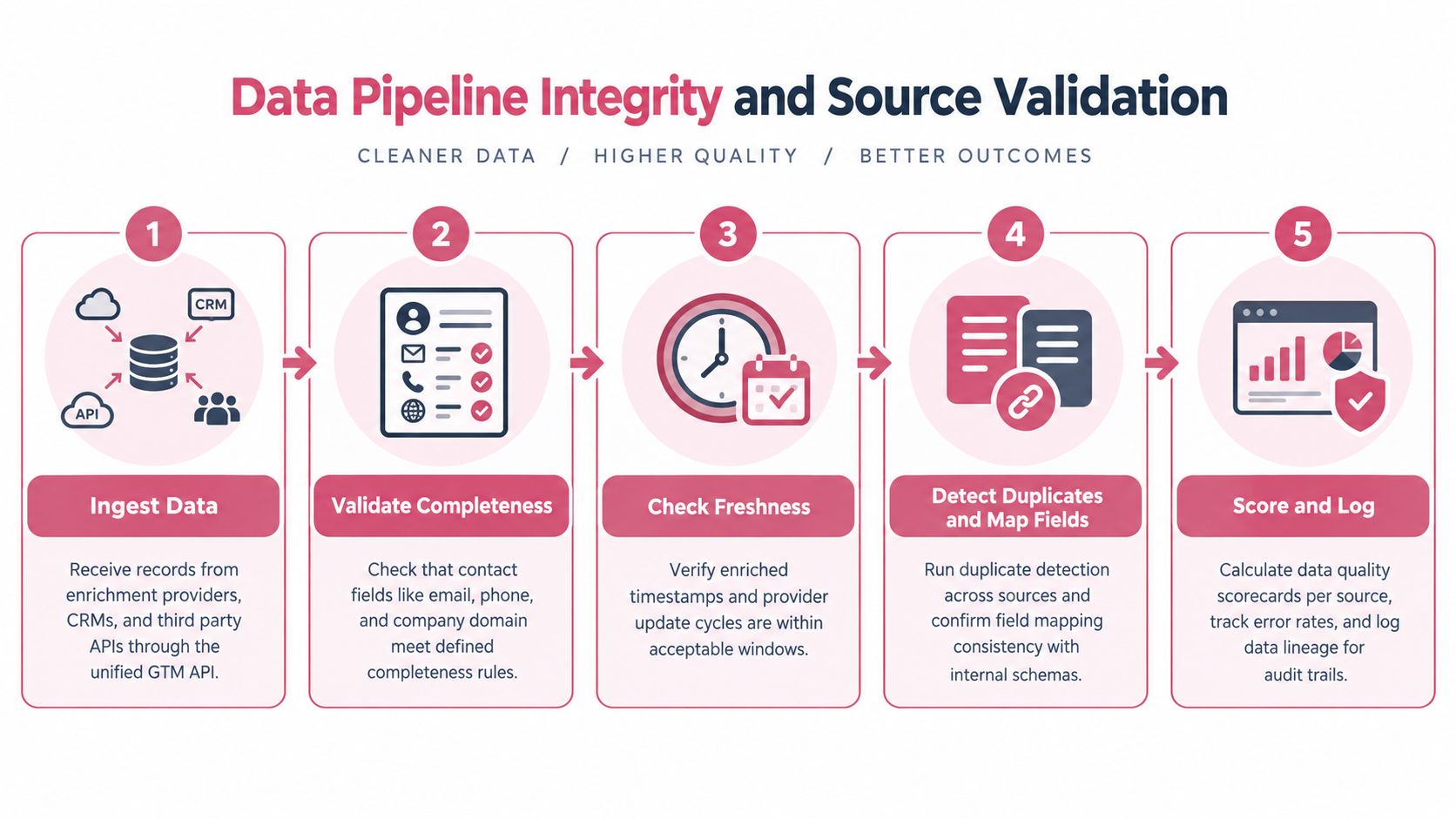
Bad source data turns a well designed campaign into a controlled failure. Before records reach an outbound queue, the operator should verify that enrichment, CRM, internal knowledge, and third party API data are complete, current, correctly mapped, and fit for the play that will use them.
For a Yalc motion, that can include Unipile, FullEnrich, Crustdata, Notion, and custom connectors behind the unified GTM API. The audit decision is whether each required field is trustworthy enough for execution. If a Campaign Builder play needs verified email, role, company, and source attribution, a record missing one of those fields should stop at validation rather than enter the queue.
What to verify
Use evidence from the actual records, not a provider's connection status.
- Email quality: Compare FullEnrich deliverability signals across prospect segments and investigate provider degradation before launch.
- Firmographic consistency: Compare Crustdata company and role fields with CRM records. Mismatches can indicate enrichment errors or stale internal data.
- Data freshness: Check whether Unipile captures title and company changes within the operating window required by the play.
- Duplicate control: Monitor Notion CRM synchronization for duplicate records before outbound systems can create double outreach.
The corrective action should match the failure. A missing field may require a validation rule. A provider mismatch may require remapping or source prioritization. A duplicate problem may require a deduplication key and a queue hold.
Practical rule: Validate against known best customers, then document the mandatory fields for each play. “Good data” is different for an ICP Scorer than it is for a Reply Handler.
Run validation as an early release gate, alert operators when a source falls below its documented threshold, and review quality regularly enough to catch drift before it compounds. The process can be recorded with this data pipeline integrity flowchart.
2. Campaign Instrumentation and Success Metric Definition
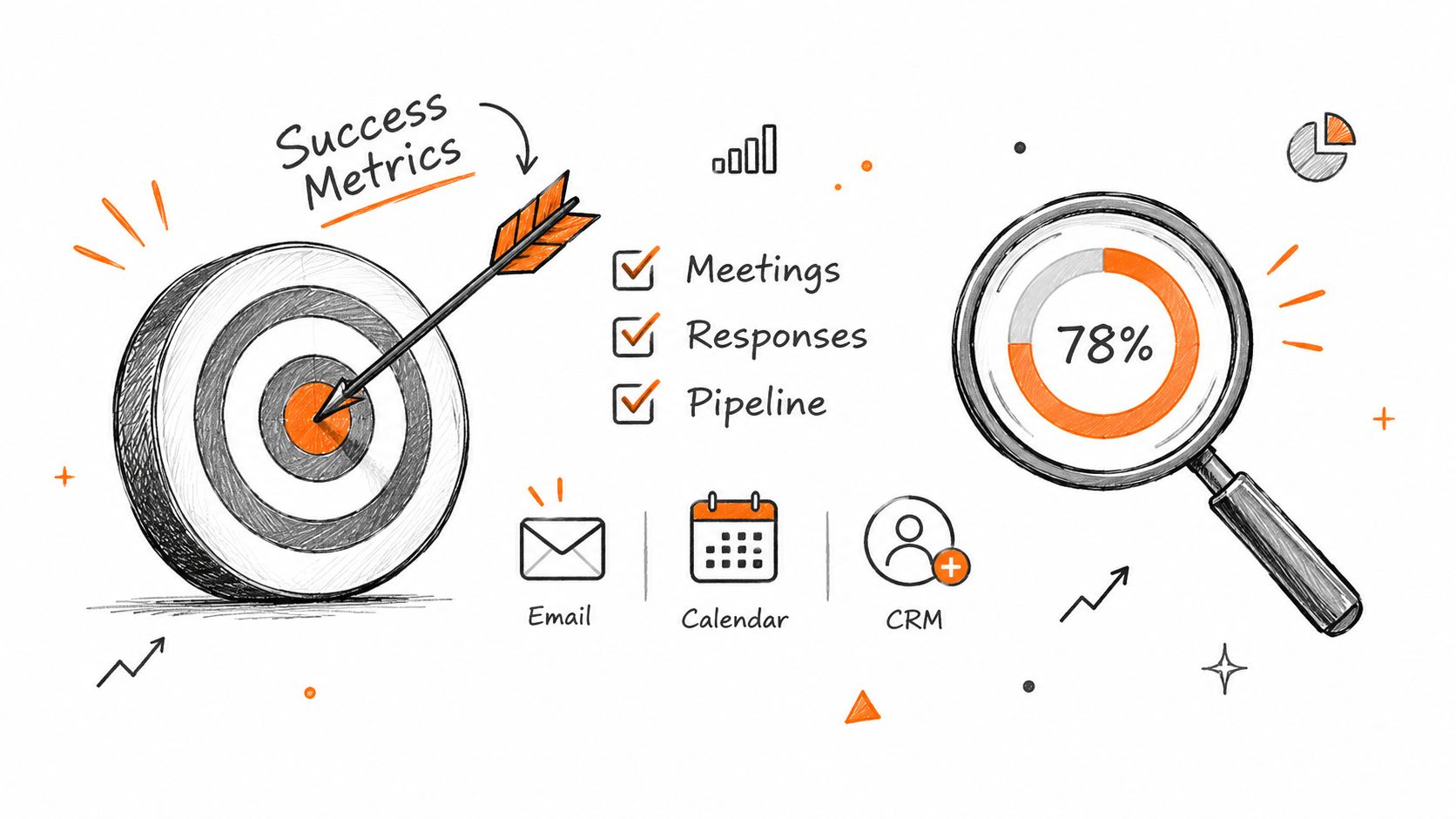
A campaign is controllable only when its outcome can be traced from the originating play to the final business result. Before launch, define the outcome, assign a campaign identifier, and verify that the CRM and reporting layer capture every event needed to evaluate it.
Set the decision rule before reviewing activity. Meetings booked, qualified opportunities, pipeline created, and positive replies provide stronger evidence than message volume. Each metric still needs a precise formula, source fields, and attribution window in one documented location. For example, a Campaign Builder play could measure meetings booked within its attribution window divided by sequences sent.
The audit should answer one question: can an operator grade the play without rebuilding the record manually?
- Campaign linkage: Confirm that CRM meeting records retain the campaign ID that generated the activity.
- Channel telemetry: Verify that Thread Writer engagement data from LinkedIn reaches Yalc for verdict scoring.
- Control design: Use a no outreach control group when the team must separate response lift from seasonality or market noise. Document the allocation before launch.
- Predictive validation: If ICP Scorer is assessed against closed deal probability, preserve its inputs and run the agreed analysis against outcomes.
A sales automation operating model becomes auditable only when it records both the action and its result. A dashboard that counts sends but cannot connect replies or meetings to the originating play measures activity, not control.
Corrective action depends on the failure. Add missing event capture when records are incomplete. Standardize the calculation when teams produce different results. Pause the play when its outcome cannot be measured. Set success bars against historical baselines, refresh reporting often enough to expose drift, and give one owner responsibility for disputed attribution.
The release decision is straightforward. Proceed when the identifier, events, formula, and attribution window agree across systems. Hold the campaign when any of those controls cannot be verified.
3. Approval Workflow and Human Escalation Governance
Approval is a control point, not a clerical step. Classify each automated action by budget, audience size, compliance exposure, and reputational risk. Then assign the approval authority, required evidence, and intervention window before the play can execute.
A routine follow-up sequence may use a lighter path than a custom campaign aimed at a sensitive account group. Messaging for regulated industries can require legal review even with a small audience. A large-list send may require senior sales approval, while a proven low-risk play can run under an existing policy.
Use an approval matrix to test four questions:
- Authority: Is one accountable approver named for each risk tier, rather than an unowned shared inbox?
- Service level: Are response expectations defined for standard and urgent requests, so governance does not block revenue work?
- Decision record: Does the system store the reasoning, not only an approval icon? The record should show, for example, that the audience was accepted while copy revision was required.
- Rejection path: Are the rejection reason, owner, revision, and resubmission route retained when another approver must review the play?
The audit passes when a reviewer can understand the proposed action, confirm the decision context, and intervene before execution. It fails when approval status exists without accountable ownership or usable evidence.
The escalation playbook for 2026 offers a reference for designing escalation paths, but the workflow must match the organization's actual authority structure. Requiring everyone to approve every action creates delay. Letting every action run without review creates exposure.
Reduce approval friction only after the record supports the change. A play that repeatedly passes compliance review can move to a lower-touch tier, provided the rule is versioned and reversible. Review rejected actions for patterns. Frequent rejection may point to weak play design, unclear guidance, or an approver who is unavailable during operating hours. Record the corrective action and rerun the approval test before release.
4. Play Performance Baseline and Comparative Analysis
A performance number becomes useful only after the operator defines what it should be compared with. Record results for each play and meaningful variant, then select a baseline that matches the segment, channel, source mix, and attribution method.
A LinkedIn Sequence Runner aimed at a narrow enterprise segment should not be measured against an all-prospect average. Apply the same discipline to Lead Qualifier accuracy, Comment Agent engagement, Visitor Pipeline conversion, and Reply Handler sentiment. Segmentation requires more preparation, but an undifferentiated baseline can hide a failing play.
Make the comparison operational
Start with the decision the comparison must support: continue normal operation, investigate variation, revise the play, or stop execution. Document the baseline population, date range, attribution rule, exclusions, and calculation method. The scorecard should place the baseline beside the current result and trend, with an owner and a threshold for investigation.
Use the change history to test the likely cause:
- Targeting: Did the ICP, segment, or source mix change?
- Message: Did copy, personalization, or sequence order change?
- Execution: Did sending cadence, channel availability, or reply handling change?
- Data: Did enrichment quality or deduplication deteriorate?
A strong segment may justify faster follow-up, but verify whether the result came from a temporary source or a repeatable attribute. A weak result may support retirement after the team rules out a broken integration, incomplete execution record, or attribution gap.
The corrective action must name both the disposition and the next check. Keep the play, revise it, pause it, or retire it, then record the evidence supporting that choice. Operational audit guidance from ISO Checklist emphasizes comparing KPIs with defined targets, investigating nonconformities, and preventing recurrence. Apply that sequence to every material variance. A scorecard without an action rule records performance but does not control it.
5. Integration Health and Data Sync Reliability
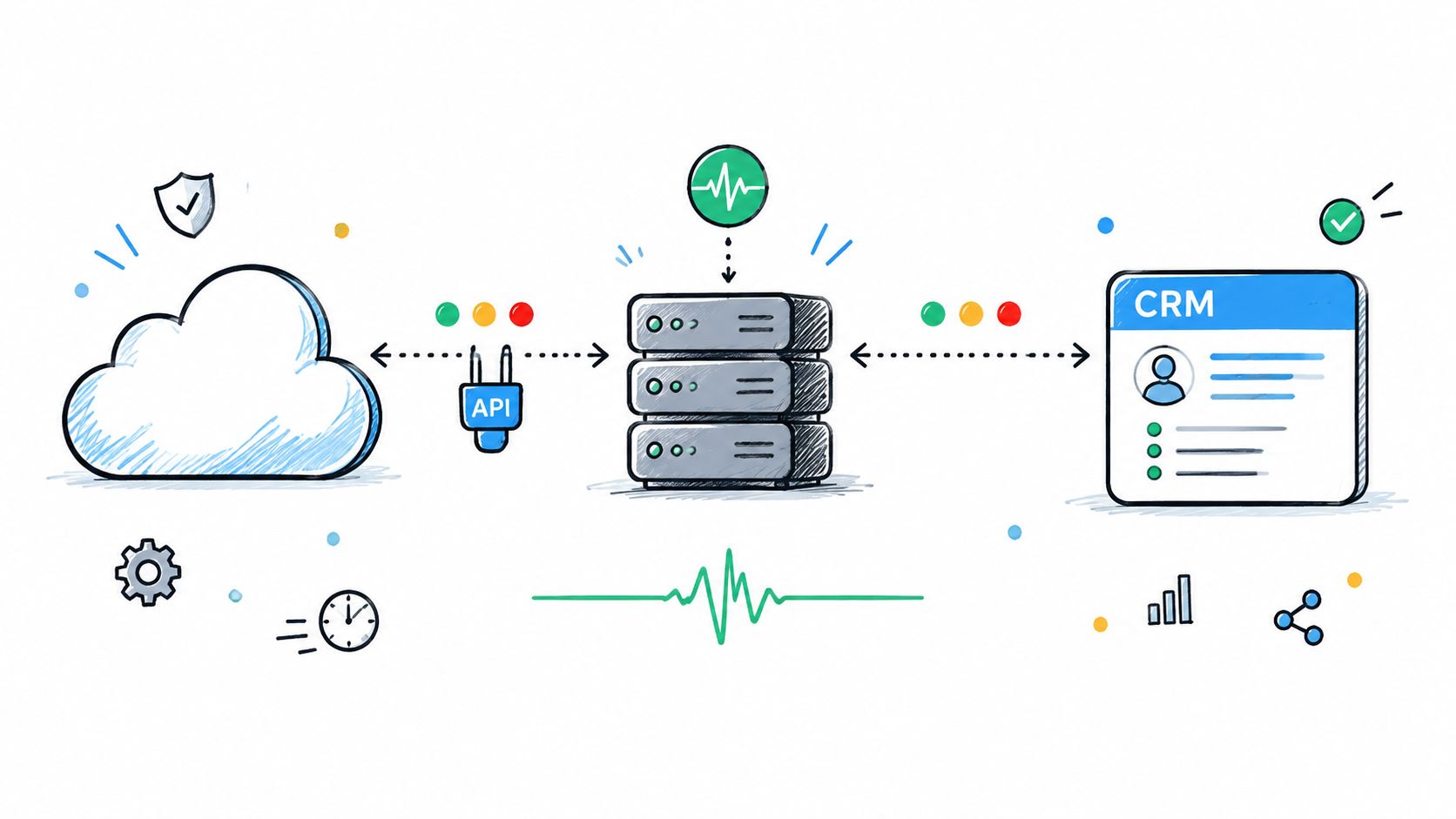
Integration status is only the starting signal. The audit must establish whether a real record can move from trigger to response, arrive within the required timing, preserve its fields, and produce an actionable execution record. Test the path end to end, then retain evidence of failures, retries, and recovery.
Trace the services used by the play in a Yalc environment, including the CRM, enrichment providers, LinkedIn, email, Slack, and other connected tools. A Notion CRM sync may stop after credential expiration. Unipile may encounter rate limits during a high-volume run. An API field-format change can break downstream validation while the connection still reports as active.
Run a transaction and decide
Send a synthetic record through the complete workflow. Compare the received payload with the expected output, then record the decision: approve continued operation, restrict volume, repair the integration, or stop execution.
Verify these control points:
- End-to-end result: The test record reaches each destination with the required fields and status.
- Failure detection: The system reports failed webhooks, expired credentials, rate limits, and malformed responses rather than dropping work.
- Recovery ownership: The runbook names who switches to manual sync, throttles sending, refreshes credentials, or restores field mapping.
- Capacity evidence: The integration owner reviews behavior under the campaign's planned operating conditions before a major volume change.
Record observed latency and its operational consequence. A response that slows from milliseconds to seconds may delay queue processing, but the audit should not claim campaign impact until that effect is measured. Corrective action may involve throttling, caching, provider substitution, or a mapping update.
AI orchestration depends on predictable service behavior. Set escalating alerts, include integration health in the daily operations review, and maintain a provider-specific recovery runbook. A connection check will not expose stale data, partial writes, or downstream rejection.
6. Compliance, Data Governance, and Privacy Audit
Compliance is a release condition for every automated play. Verify consent, suppression, message content, retention, and access controls in the execution path before allowing prospect data to move or messages to send.
Start by defining the requirements for the campaign's geography, audience, channel, and industry. Record the applicable rules, then test the controls that enforce them. A consent spreadsheet outside Campaign Builder cannot reliably suppress contacts unless synchronization and failure handling are verified.
Use one control decision for each area:
- Suppression matching: Confirm opted-out and unsubscribed contacts are blocked before execution, including records added after the campaign was configured.
- Message compliance: Review templates for sender identification, required business information, and a working unsubscribe path where applicable.
- Channel policy: Check LinkedIn sequences against applicable platform terms and the organization's internal automation rules.
- Retention: Verify that data enriched through FullEnrich and Crustdata has a documented campaign purpose, retention period, and deletion path under the data minimization policy.
- Access review: Inspect logs for authorized operators, accessed records, timestamps, and role alignment.
The audit decision is whether the play can run without relying on a last-minute manual check. If suppression matching is manual, automate it or pause the play. If a template has unresolved legal questions, route it to Legal before approval. Legal should review templates on a defined cadence and whenever requirements change.
Preserve evidence for every failed check. Audit log insights from Querio can inform access-evidence design, while the organization sets its own consent, retention, and escalation rules.
A privacy failure should pause the affected play, identify the control that permitted it, and assign remediation. Corrective action may require a rule change, data purge, permission reduction, or legal review. Record the decision and reopen execution only after the failed control passes verification.
7. Knowledge Base Accuracy and ICP Alignment Validation
A GTM system can execute perfectly against the wrong assumptions. The operator should audit the knowledge layer that stores the ICP, buyer personas, positioning, product facts, and messaging guidance, then compare those assumptions with recent wins, losses, and sales conversations.
Institutional knowledge becomes an operational control. If the stored ICP describes smaller SaaS companies but recent closed deals consistently come from larger organizations, the issue isn't only a targeting mistake. It's a stale decision rule that can affect every downstream play.
Test knowledge against revenue evidence
Review the stored definition against closed deals and win loss notes. Check whether the buyer persona reflects actual decision makers, whether competitive positioning matches recent objections, and whether product descriptions and pricing references remain current.
Give each knowledge element a confidence state and preserve its version history. A play should know whether it's relying on a recently validated rule or an assumption that hasn't been tested. Sales feedback that flags incorrect targeting should create a review task rather than disappear into a chat thread.
How to qualify sales leads provides a useful context for connecting qualification logic with the evidence operators collect from prospects. The audit decision is whether a play's assumptions still match the market it is being asked to address.
Corrective action may involve changing the ICP, expanding a persona, rewriting a competitive claim, or removing an obsolete product detail. Version the change, name the owner, record the evidence, and identify which plays need retesting. An unversioned knowledge edit makes later root cause analysis difficult because the team can't tell which assumption was active at launch.
8. Operator Activity and Campaign Execution Audit Trail
A campaign record should explain who created the play, who approved it, what changed, when execution occurred, which data was accessed, and how the result was reported. Without that history, operators can't distinguish a strategy failure from a mid campaign configuration error.
A useful audit trail preserves original content and event order. It binds each action to a unique identity, the exact evidence or configuration version, and a synchronized timestamp with timezone handling. It also protects records against unauthorized editing or deletion, monitors logging failures, and tests whether retained records can be retrieved for review. Workflow audit trail guidance describes these technical control areas in practical terms.
Make the record investigation ready
Index logs by campaign ID so an investigator can reconstruct one run quickly. Capture targeting edits, approval comments, launch events, pauses, retries, data access, and report changes. API level logging is stronger than asking operators to remember to document every action manually.
The audit decision is whether the record can answer three questions without guesswork:
- Accountability: Who performed or approved the action?
- Causality: What changed before the result moved?
- Control: Could an unauthorized person alter or remove the evidence?
A campaign that underperforms after several targeting edits requires a different corrective action from one that ran unchanged against stale data. Similarly, repeated approval delays may indicate an availability problem rather than poor campaign quality. Operator patterns can reveal useful training opportunities, but activity analysis should be used carefully and with defined access controls.
Set a retention policy that matches legal and operational needs, then test retrieval rather than assuming logs remain available. Review anomalies in operations meetings, such as unusual access, clustered rejections, or execution delays. The NotFair ad account audit approach offers another example of organizing review around account activity and control evidence. The audit trail should help the team repair the system, not merely assign blame.
8-Point Operational Audit Comparison
| Audit Area | 🔄 Implementation Complexity | ⚡ Resource Requirements | ⭐ Expected Outcomes | 💡 Ideal Use Cases | 📊 Key Advantages |
|---|---|---|---|---|---|
| Data Pipeline Integrity and Source Validation | Medium, validation rules, mapping, dedupe logic | Moderate–High, engineering, data tooling, monitoring | ⭐⭐⭐⭐, improved data accuracy, fewer wasted sends | High-volume outbound, multi-provider enrichment, CRM syncs | Prevents bad records, reliable metrics, audit trail |
| Campaign Instrumentation and Success Metric Definition | Medium, instrumenting pixels, webhooks, control groups | Moderate, analytics, CRM hooks, dashboards | ⭐⭐⭐⭐, measurable campaigns, faster iteration | New plays, ROI attribution, experiments | Clear measurement, reproducible scoring, ROI evidence |
| Approval Workflow and Human Escalation Governance | Low–Medium, role matrices, SLAs, audit logging | Low–Moderate, governance tooling, training | ⭐⭐⭐, reduced legal/brand risk, controlled launches | Large sends, sensitive accounts, regulated messaging | Compliance protection, accountability, clear escalation |
| Play Performance Baseline and Comparative Analysis | Medium, baseline capture, segmentation, A/B logging | Moderate, historical data, alerting, analytics | ⭐⭐⭐⭐, detect degradation, identify winners | Continuous optimization, scaling plays, A/B tests | Early alerts, scale-ready play ID, trend visibility |
| Integration Health and Data Sync Reliability | High, end-to-end monitoring, retries, error handling | High, monitoring infra, SRE, synthetic checks | ⭐⭐⭐⭐, fewer silent failures, faster recovery | Multi-system integrations, mission-critical syncs | Prevents stale data, rapid incident response, vendor evidence |
| Compliance, Data Governance, and Privacy Audit | Medium–High, consent, retention, suppression enforcement | Moderate, legal review, automation, policy tooling | ⭐⭐⭐⭐, regulatory alignment, lower legal exposure | GDPR/CCPA environments, regulated industries, large lists | Prevents fines, builds trust, audit-ready evidence |
| Knowledge Base Accuracy and ICP Alignment Validation | Medium, win/loss analysis, versioning, reviews | Moderate, sales/marketing alignment, data analysis | ⭐⭐⭐, improved targeting, updated messaging | Market shifts, product changes, evolving ICPs | Prevents stale targeting, aligns plays to wins, faster updates |
| Operator Activity and Campaign Execution Audit Trail | Low–Medium, comprehensive logging, indexing, retention | Moderate, storage, dashboards, access controls | ⭐⭐⭐, forensics-ready logs, operator accountability | Compliance audits, incident investigation, training | Root cause analysis, dispute evidence, operator insights |
Turn the Audit Into a Release Gate
A checklist creates value when it changes what the team is allowed to launch. The review should produce a control register with one owner for each area, the current status, the evidence reviewed, the threshold for pause or escalation, and the corrective action required. “In progress” isn't evidence. A field validation report, approval record, dashboard definition, integration test, consent match, knowledge version, or execution log is evidence.
Use the dependency order consistently. Validate source data before reviewing campaign performance. Confirm the knowledge layer before trusting targeting. Test integrations before interpreting missing events. Define measurement before grading a play. Review approvals and permissions before execution. Preserve the audit trail before an incident creates pressure to reconstruct it.
A practical operational audit checklist can follow an ordered lifecycle rather than a disconnected set of questions. The published 20 step checklist sequence includes scope, documentation, process mapping, interviews, detailed testing, reporting, recommendation review, follow up, and closure. That structure matters because remediation is part of the audit, not an optional activity after the report is filed.
Each finding should have a risk level, business impact, owner, and verification method. A failed data quality gate might pause one campaign. A broken suppression control might require a broader stop and legal review. A stale ICP definition may require retesting several plays rather than correcting one record. The response should match the control failure.
Run the review after material change
Don't wait for a calendar review when the operating system changes. Rerun the affected checks after a new data provider, CRM mapping, playbook, permission model, approval rule, or privacy requirement is introduced. An update to one service can change the assumptions used by several downstream controls.
Continuous monitoring is especially important for automated work. Recent guidance on AI governance and internal audit has expanded attention toward ongoing monitoring, scoped access, approvals, human review gates, and auditable action logs for automated systems. The 2026 internal audit checklist guidance reflects that direction, but the practical lesson applies now: a periodic form isn't enough when automated actions run continuously.
The release decision should be clear. Automation is ready to scale when its inputs are reliable, its actions are controlled, its results are measurable, and its records can explain what happened. If one of those conditions is missing, the correct response isn't optimism. It's a smaller scope, a stronger control, or a pause until the evidence supports release.
Yalc can serve as one operating surface for reviewing unified data access, GTM knowledge, human approvals, scoped permissions, play telemetry, and campaign outcomes. Whether a team uses Yalc or another stack, the operating discipline remains the same. Assign ownership, preserve evidence, set thresholds, follow up on corrective action, and let validated results determine what scales.
Yalc brings a unified GTM API, orchestrated ICP and play knowledge, approval controls, scoped permissions, and step by step campaign telemetry into one operating system for GTM work. Visit Yalc to review how its plays and audit records can support a more controlled operational audit process.